
Winter hiking is a refreshing way to enjoy the crisp air, snowy landscapes, and peaceful beauty of nature. However, dressing properly is key to staying warm, dry, and comfortable during your adventure. The cold weather brings both charm and challenges, so knowing how to layer effectively and choose the right fabrics can make your hiking experience much more enjoyable.
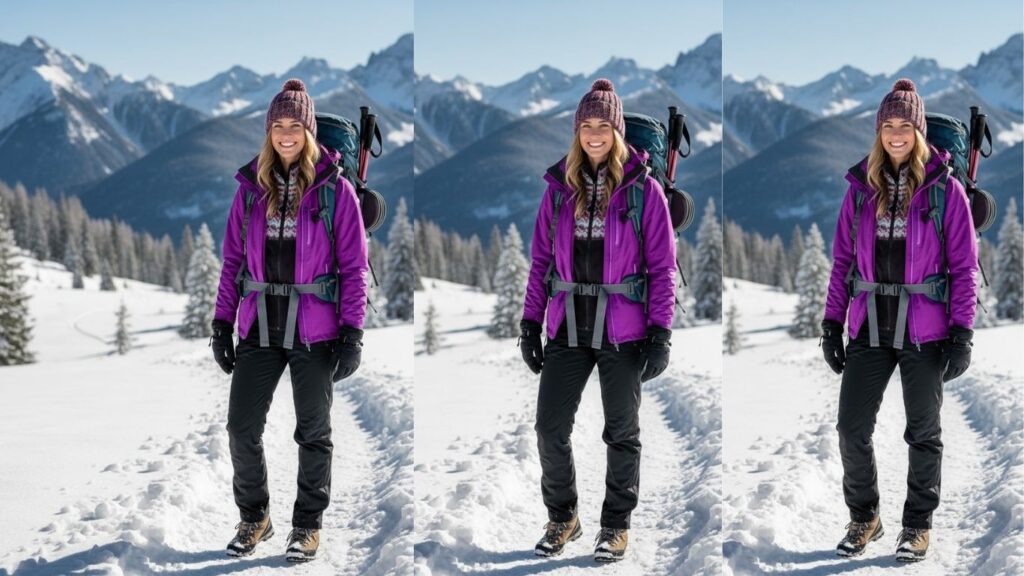
The perfect winter hiking outfit should keep you insulated, wick away sweat, and protect you from wind, moisture, and freezing temperatures — all while allowing freedom of movement. Whether you’re a seasoned hiker or new to winter trekking, what you wear determines how enjoyable your hike will be.
In this detailed guide, we’ll go over 15 winter hiking outfit women ideas designed for comfort, warmth, and function — without sacrificing style. From thermal layers and waterproof jackets to cozy accessories and durable footwear, each idea will help you conquer those cold-weather trails confidently.
5 Items to Buy for Winter Hiking Outfits
1. Waterproof Hiking Boots
Waterproof hiking boots provide traction, protect against moisture, and keep your feet warm. They are essential for navigating snow, mud, or icy trails.
2. Insulated Jacket
A lightweight insulated jacket is key for retaining body heat while allowing freedom of movement. Down or synthetic insulation works depending on weather conditions.
3. Thermal Base Layers
Thermal tops and bottoms wick moisture and keep you warm. They are perfect for layering under sweaters, hoodies, or outer jackets.
4. Fleece or Softshell Pants
Fleece-lined or softshell pants provide warmth and flexibility. They protect against wind while allowing easy movement during strenuous hikes.
5. Accessories for Warmth
Beanies, gloves, neck gaiters, and thermal socks help maintain body heat, while also allowing you to incorporate color and style into your hiking outfit.
What to Consider Before Choosing Winter Hiking Outfits
When planning your outfit, keep these essentials in mind:
- Layering is key: A base layer for warmth and moisture control, a mid-layer for insulation, and an outer layer for weather protection.
- Choose the right fabrics: Avoid cotton — opt for wool, fleece, or synthetic blends that wick moisture and dry quickly.
- Footwear matters: Insulated, waterproof hiking boots keep your feet warm and prevent frostbite or discomfort.
- Don’t forget accessories: Hats, gloves, and scarves protect extremities where body heat is easily lost.
- Comfort over fashion: While you can still look good, prioritize warmth and mobility first.
Now, let’s dive into practical and stylish winter hiking outfit ideas that balance performance and aesthetics perfectly.
1. Thermal Base Layer with Fleece Pullover and Shell Jacket
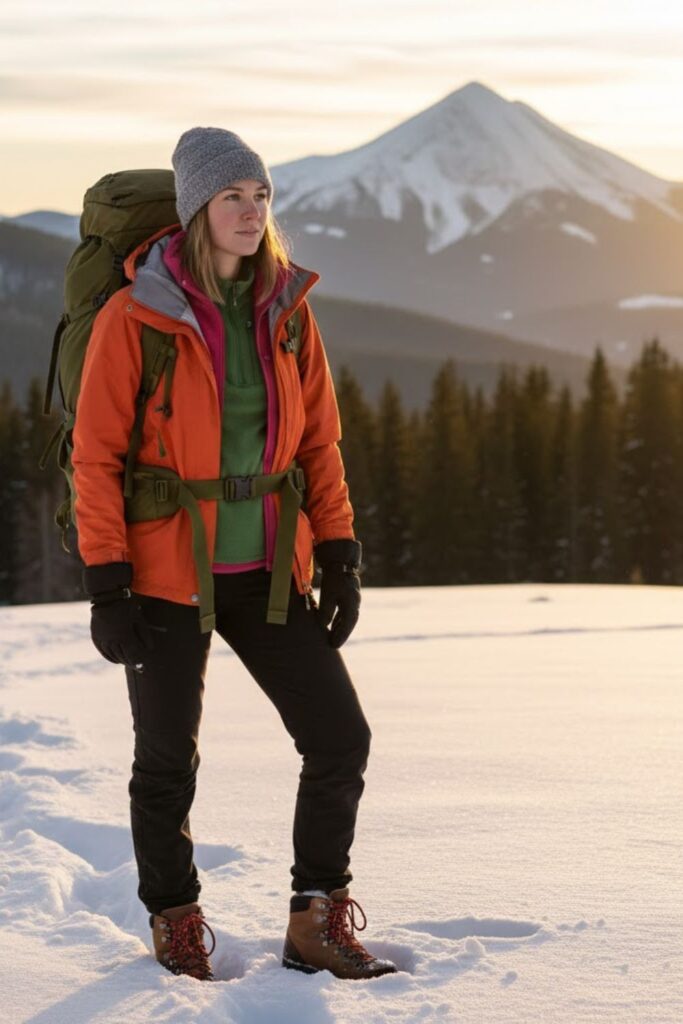
Start your hike with a moisture-wicking thermal base layer, which traps warmth while keeping you dry. Add a fleece pullover as your mid-layer for insulation. Finish with a waterproof shell jacket to protect against snow and wind. Pair this with insulated leggings or hiking pants and sturdy boots. This layered approach allows flexibility — you can remove or add layers depending on the weather and your activity level.
2. Down Jacket with Wool Leggings and Hiking Boots
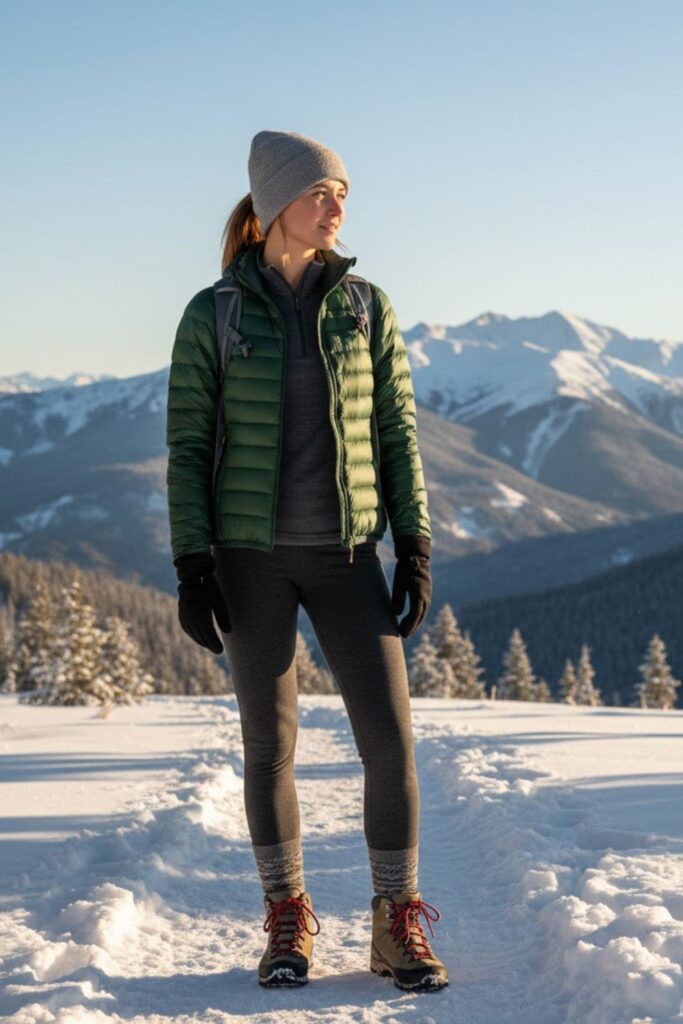
A lightweight down jacket provides excellent insulation without bulk. Pair it with merino wool leggings, which regulate temperature and wick away sweat. Choose waterproof hiking boots with good ankle support for stability. Complete the look with wool socks and gloves. This outfit is perfect for cold but dry hiking days where warmth and breathability are equally important.
3. Fleece Jacket with Thermal Top and Softshell Pants
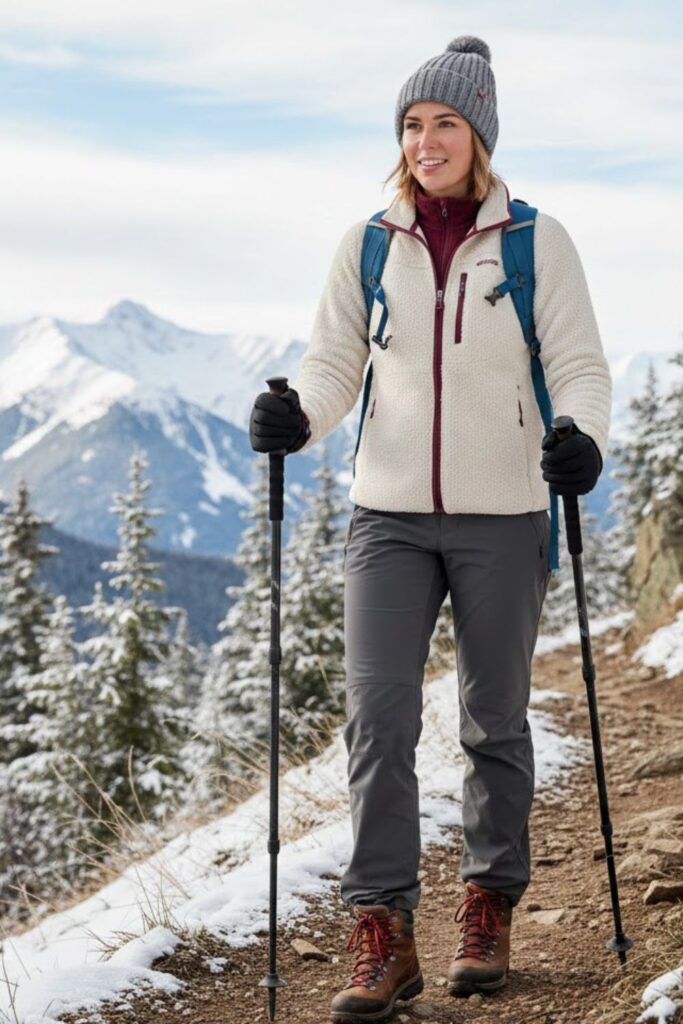
Fleece jackets are warm, breathable, and easy to move in — ideal for moderate hikes in cold weather. Layer over a thermal top for insulation and pair with softshell pants that are wind-resistant yet flexible. Add a beanie and waterproof gloves to keep your extremities cozy. This outfit provides great mobility while maintaining comfort during uphill climbs or active movement.
4. Insulated Vest with Long-Sleeve Base Layer and Tights
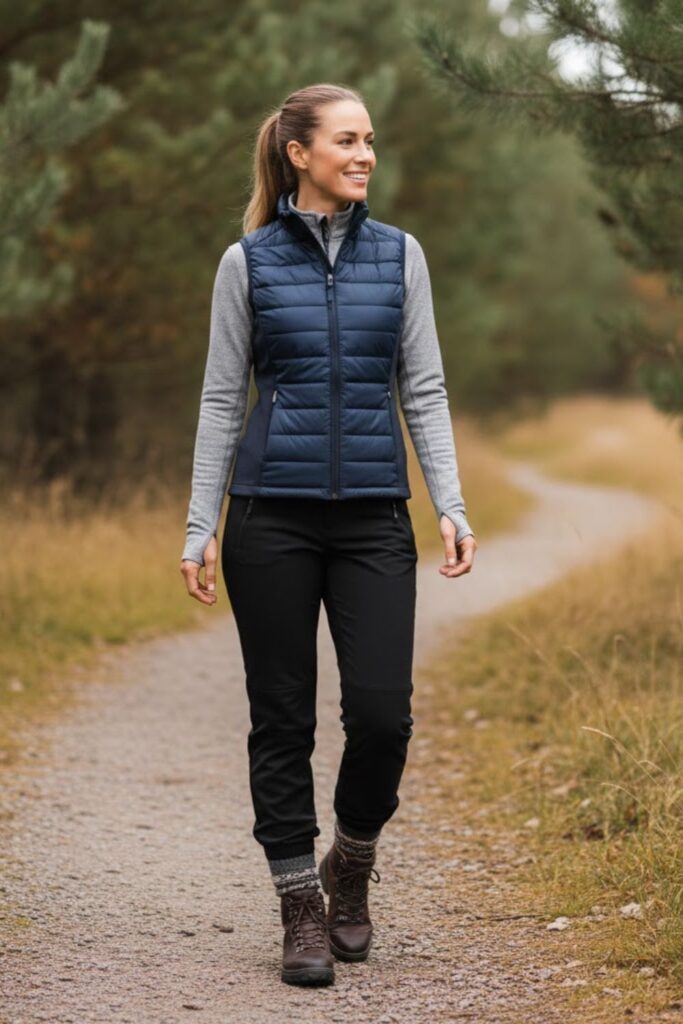
If you prefer a lighter outfit, an insulated vest over a long-sleeve thermal top gives warmth without restricting your arms. Pair it with insulated tights or fleece-lined hiking pants for flexibility and comfort. Add mid-calf socks and ankle boots for a sleek yet practical look. This combination works well for short hikes or brisk outdoor walks where full outerwear might be too heavy.
5. Waterproof Parka with Wool Sweater and Hiking Pants
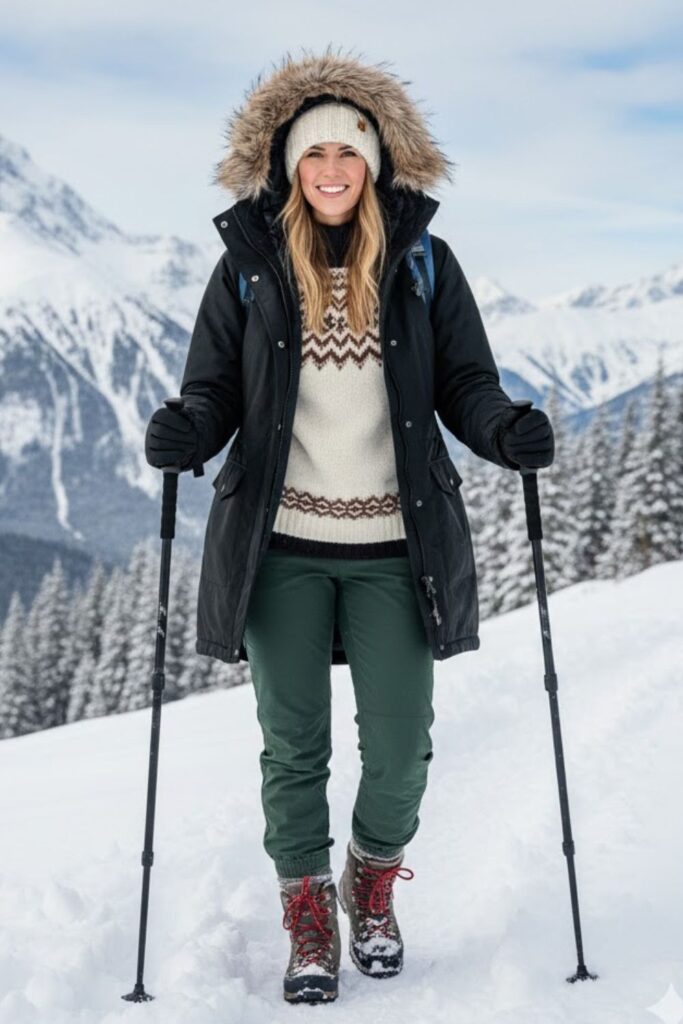
For extreme cold or snowy trails, a waterproof parka offers maximum protection. Layer it over a wool sweater for warmth and comfort. Combine with water-resistant hiking pants and insulated boots. This combination keeps you dry, warm, and stylish — perfect for long hikes in deep snow or unpredictable mountain weather.
6. Puffy Jacket with Base Layer and Fleece-Lined Leggings
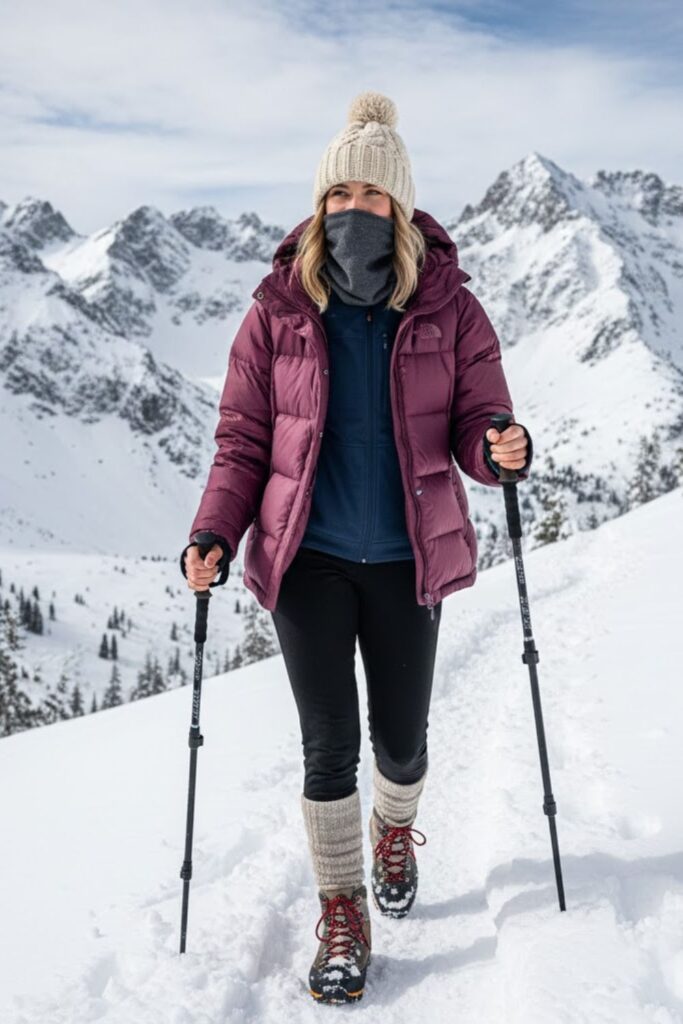
A puffy jacket is essential for insulation in freezing temperatures. Layer it over a quick-dry base layer and fleece-lined leggings. The combination ensures you retain heat while staying dry. Add a knit hat and neck gaiter for extra warmth. This outfit is great for high-altitude hikes or colder climates where layering efficiently makes a big difference.
7. Windbreaker with Wool Base Layer and Cargo Pants
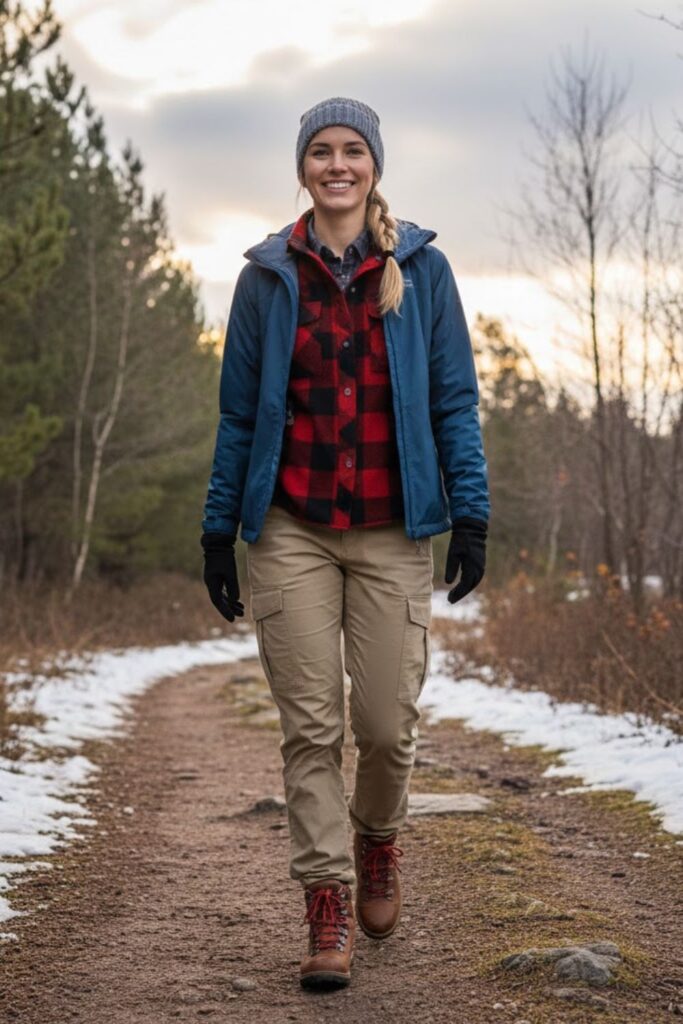
For milder winter days or windy hikes, a lightweight windbreaker works perfectly. Pair it with a wool base layer to stay warm and breathable. Cargo pants made from water-resistant fabric offer practicality and comfort. Add hiking boots and gloves for full protection. This outfit is ideal for early winter or transitional weather hikes.
8. Softshell Jacket with Fleece Hoodie and Thermal Leggings
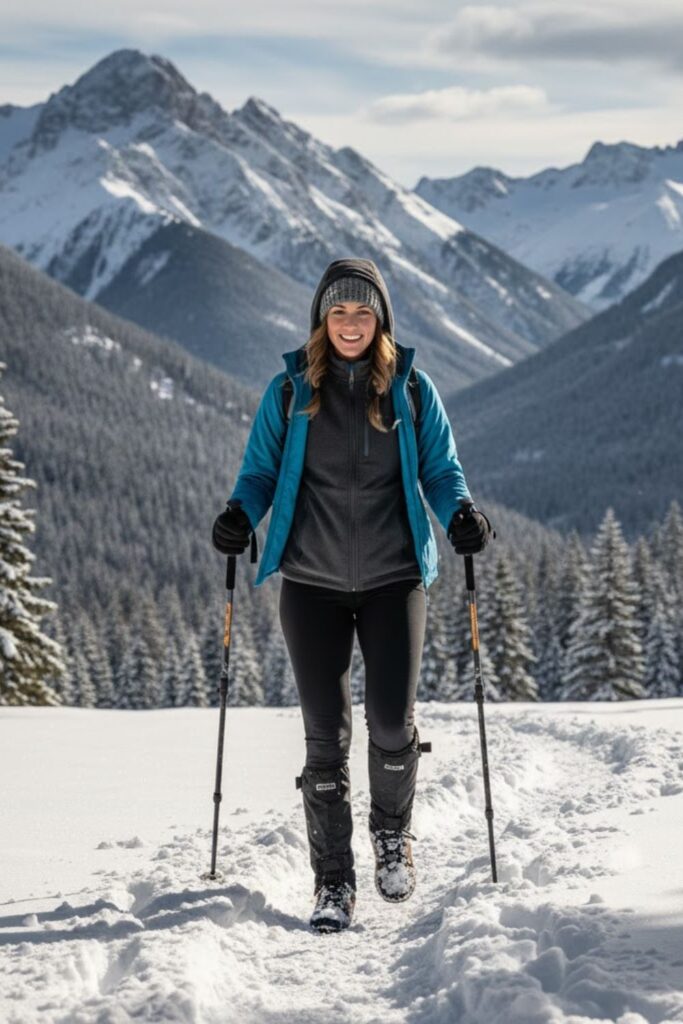
Layer a softshell jacket over a fleece hoodie for warmth and flexibility. Pair it with thermal leggings that provide insulation without bulk. This look is cozy yet functional — great for fast-paced hikes or trails with elevation. Add gaiters and snow-proof boots for extra protection if you’ll be walking through deeper snow.
9. Merino Wool Sweater with Puffer Vest and Trekking Pants
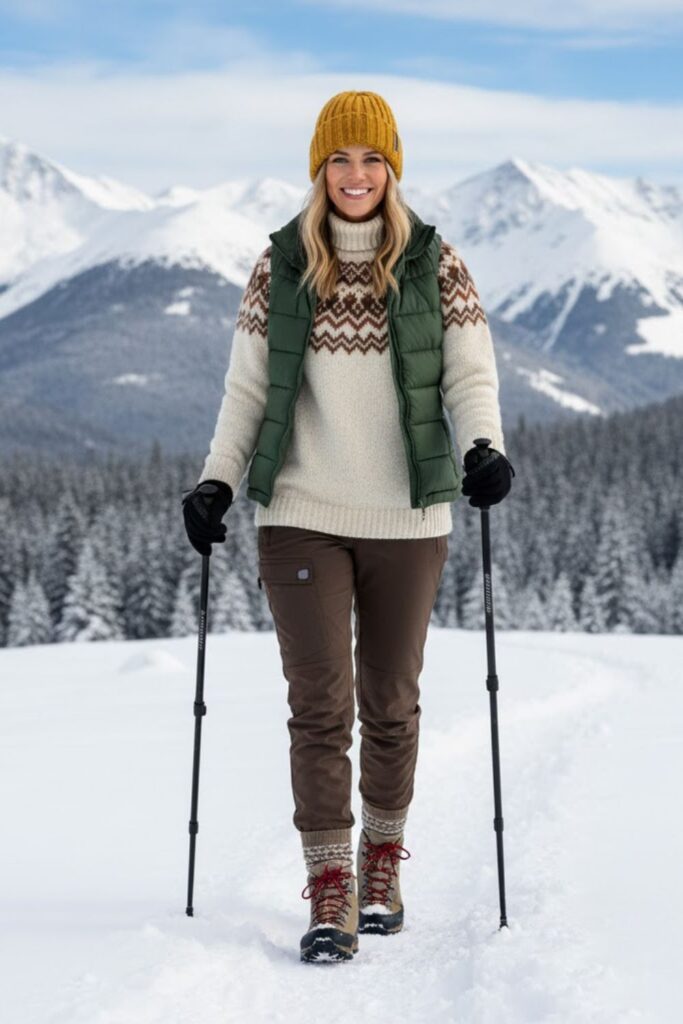
Merino wool is known for its warmth and breathability, making it perfect for winter hiking. Wear a merino wool sweater under a puffer vest for a balanced temperature. Combine with trekking pants that are insulated but not restrictive. Complete with waterproof boots and a warm beanie. This outfit blends performance with a timeless winter aesthetic.
10. Heated Jacket with Fleece Pants and Gloves
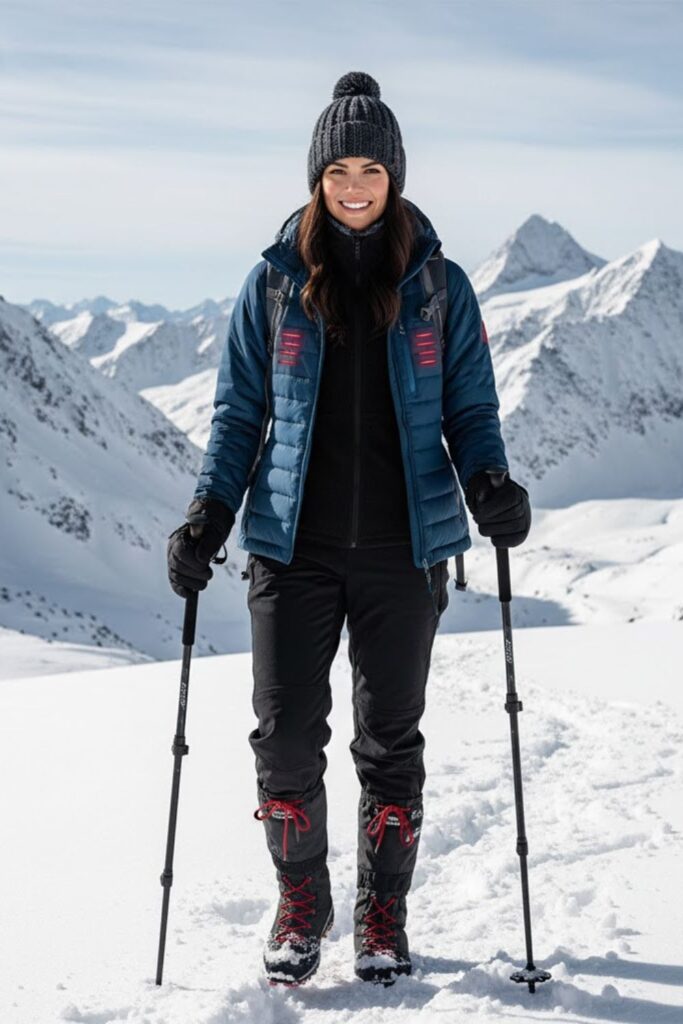
For extremely cold conditions, invest in a heated jacket that runs on rechargeable batteries. Pair it with fleece pants for maximum insulation. Add a thermal base layer underneath and insulated gloves to protect your hands. This combination is ideal for long hikes or mountain treks where temperatures drop drastically, ensuring warmth and comfort throughout.
11. Hardshell Jacket with Waterproof Pants and Gaiters
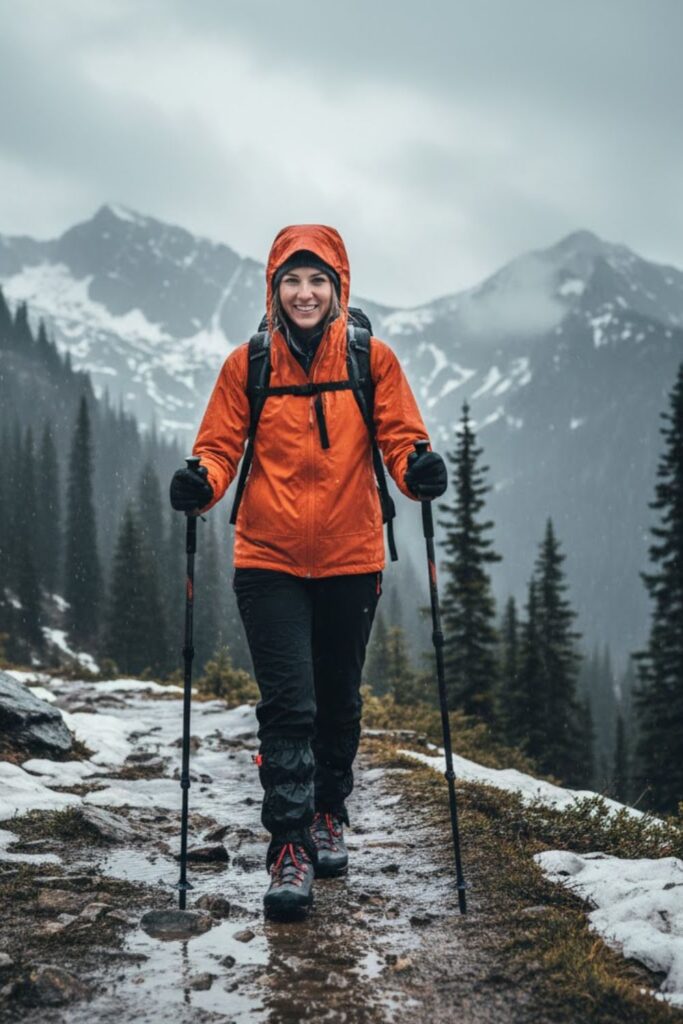
When snow or rain is in the forecast, a hardshell jacket and waterproof pants are a must. They act as an impenetrable barrier against moisture. Layer over thermal undergarments and add gaiters to prevent snow from entering your boots. This outfit ensures you stay dry and comfortable no matter how wet or icy the trail gets.
12. Quilted Jacket with Knit Beanie and Mid-Weight Pants
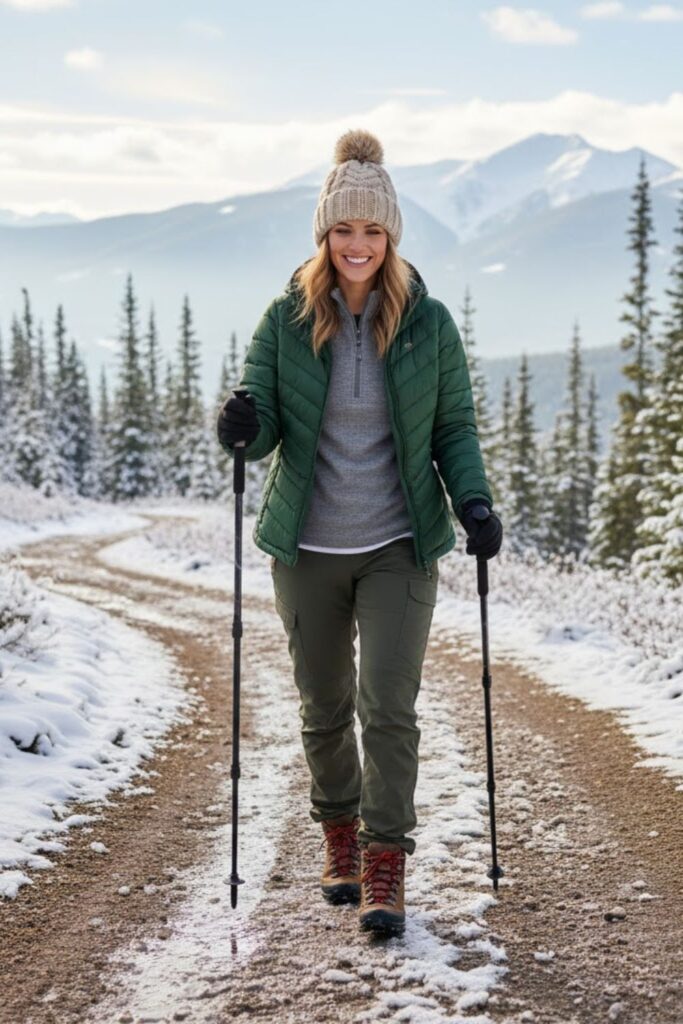
A quilted jacket provides insulation without feeling bulky. Pair it with mid-weight hiking pants and a knit beanie for a stylish yet practical look. This combination works well for moderate hikes or short winter adventures. It provides a good balance of mobility, warmth, and protection against chilly winds.
13. Parka with Thermal Turtleneck and Softshell Pants
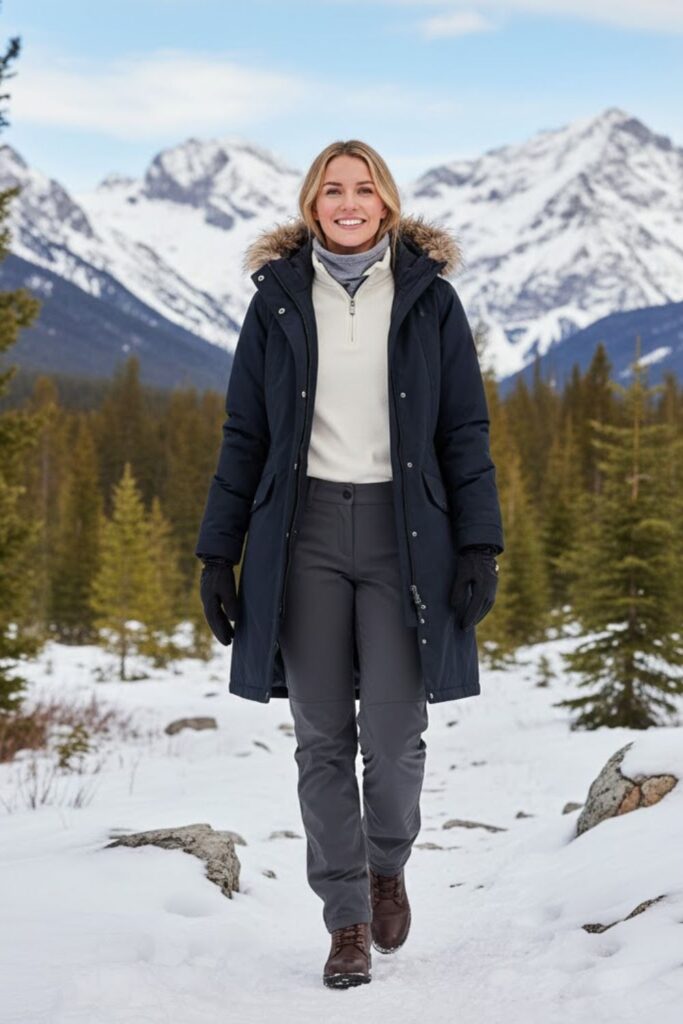
Layer a thermal turtleneck under a long parka for a sleek, warm winter look. Add softshell pants for durability and flexibility. This outfit provides a polished, functional style for cold hikes or nature walks. Accessorize with insulated gloves, a neck warmer, and ankle boots for a complete winter-ready outfit.
14. Base Layer Set with Lightweight Jacket and Snow Boots
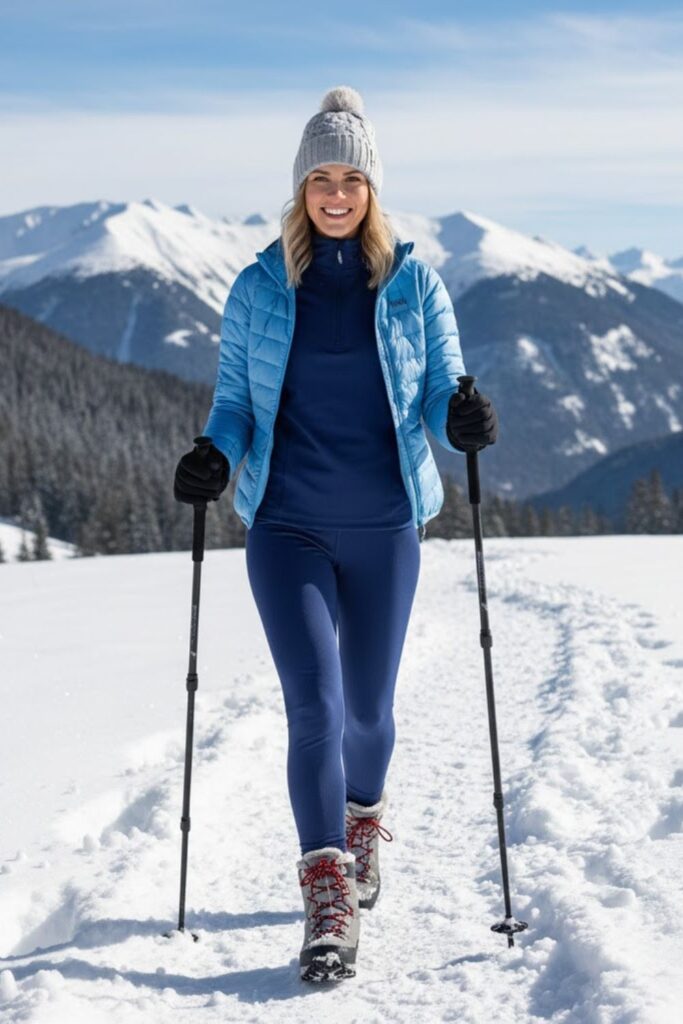
A matching base layer set (thermal top and leggings) is a great starting point for any hike. Layer with a lightweight insulated jacket for warmth and mobility. Pair with snow boots for traction and dryness. This minimalist approach keeps you comfortable without excessive layers, making it ideal for moderate activity levels.
15. Longline Coat with Fleece Hoodie and Cargo Leggings
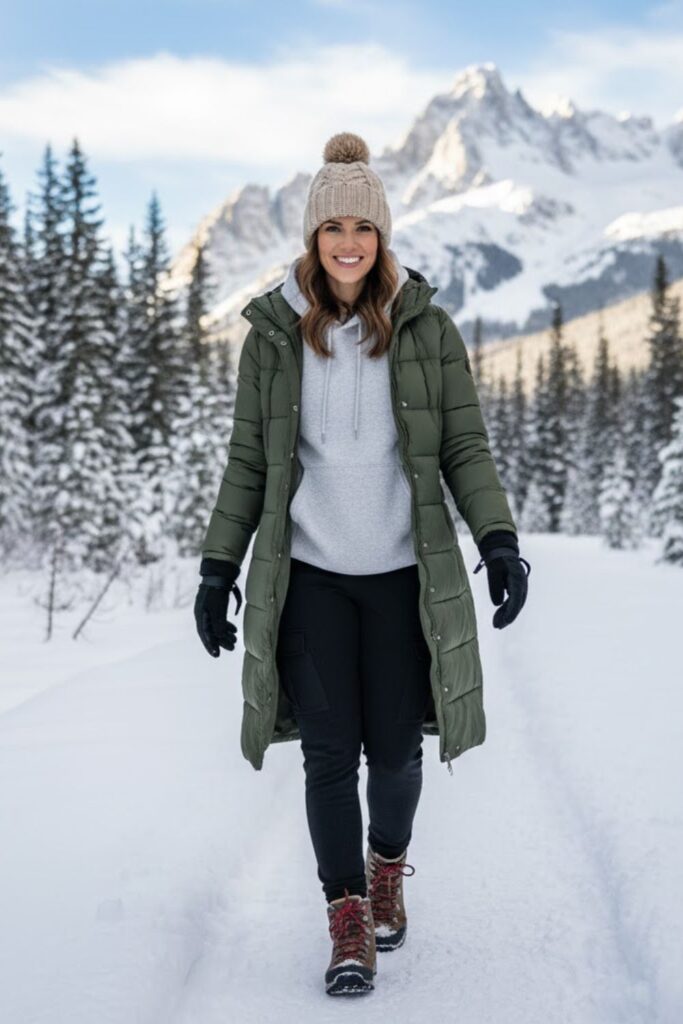
For a trendy yet practical outfit, pair a fleece hoodie with cargo leggings and layer with a longline coat. Add insulated hiking boots and gloves for full protection. This look balances warmth, functionality, and fashion — perfect for hikes where you still want to look good in your trail photos.
Essential Accessories for Winter Hiking
To complete your outfit and ensure comfort, don’t forget the following accessories:
- Thermal socks: Keep your feet warm and dry, preventing blisters or frostbite.
- Insulated gloves or mittens: Protect your hands while maintaining dexterity.
- Beanie or headband: Retain body heat through your head, a major source of heat loss.
- Neck gaiter or scarf: Shields your face and neck from cold winds.
- Backpack: Choose a water-resistant one to carry essentials like water, snacks, and an extra layer.
- Sunglasses or goggles: Snow glare can be harsh on the eyes, especially on sunny winter days.
Tips for Dressing Smartly for Winter Hikes
- Dress in layers: Start with a moisture-wicking base, add an insulating mid-layer, and finish with a weatherproof outer layer.
- Avoid cotton: It absorbs moisture and can make you feel colder.
- Pack extra socks and gloves: Wet accessories lose insulation quickly.
- Stay dry: Moisture control is as important as warmth — sweat and snow can chill your body fast.
- Focus on comfort: Choose stretchable, breathable materials for easy movement.
- Check weather conditions: Always adjust layers based on expected temperature and wind chill.
- Wear bright or reflective colors: These improve visibility during cloudy or snowy hikes.
FAQ
1. What should I wear for winter hiking as a beginner?
Start with a base layer, add a fleece or wool mid-layer, and finish with a waterproof jacket. Pair with insulated pants and waterproof hiking boots.
2. Can I wear leggings for winter hiking?
Yes, but opt for fleece-lined or thermal leggings that provide insulation and moisture control.
3. How do I stay warm while hiking in cold weather?
Layering is key. Choose moisture-wicking materials and add insulating layers that trap heat without restricting movement.
4. What are the best shoes for winter hiking?
Waterproof, insulated hiking boots with good traction work best. They keep your feet warm and prevent slipping on icy terrain.
5. Should I wear cotton while hiking in winter?
Avoid cotton — it traps moisture and makes you cold. Choose wool or synthetic materials instead.
6. How can I look stylish while winter hiking?
Choose coordinated colors, fitted layers, and sleek accessories like matching gloves and beanies. You can stay warm and fashionable at the same time.
7. What type of jacket is best for winter hikes?
A combination of insulation and weather protection works best — look for down, synthetic-filled, or waterproof hardshell jackets.
Final Words
Winter hiking is not just about adventure; it’s about feeling connected to nature even in the coldest months. The right outfit helps you stay warm, dry, and confident so you can focus on the experience rather than the temperature. These 15 winter hiking outfit women ideas balance practicality and style, ensuring you’re well-prepared for every snowy trail and crisp mountain breeze.
From thermal layers to insulated outerwear, every detail matters when you’re exploring the outdoors in winter. Dress smartly, layer thoughtfully, and choose comfort without sacrificing confidence. With the right gear, you’ll be ready to conquer any winter hike with warmth, strength, and style.