
Trekking in the mountains during winter is a breathtaking adventure — crisp air, snow-dusted landscapes, and serene views make it an unforgettable experience. But one thing that can make or break your journey is what you wear. The right trekking outfit not only keeps you warm and dry but also ensures you move comfortably through changing terrains.
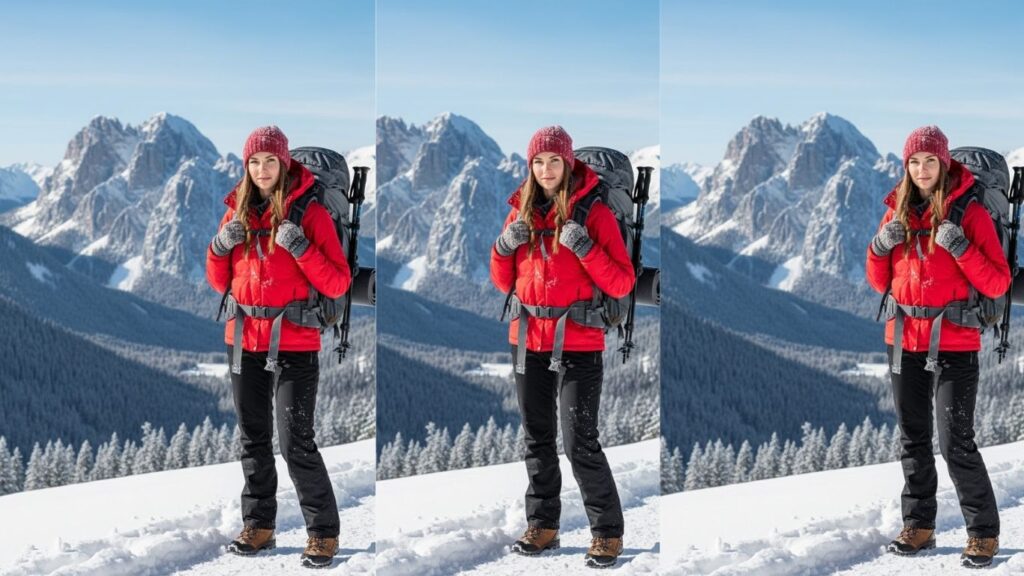
Winter mountain treks demand smart layering, moisture-wicking fabrics, and protective gear that can handle the cold while allowing flexibility and style. Whether you’re planning a short hike or a multi-day mountain trek, your outfit should strike the perfect balance between warmth, functionality, and comfort.
Understanding Winter Trekking Outfits for Women
Before diving into specific outfit ideas, it’s essential to understand what makes a perfect trekking outfit for women in the mountains during winter. The key is layering: you want to trap heat, wick away sweat, and protect against wind or snow.
A good outfit typically includes:
- Base layer: Moisture-wicking thermal top and leggings to keep your skin dry.
- Mid layer: Insulating fleece or down jacket to retain body heat.
- Outer layer: Waterproof and windproof shell to protect from elements.
- Accessories: Gloves, hats, scarves, and socks designed for insulation and comfort.
Now, let’s go through 15 trekking outfit ideas for women in the mountains during winter that combine practicality, protection, and style.
1. Thermal Base Layer with Fleece Jacket and Trekking Pants
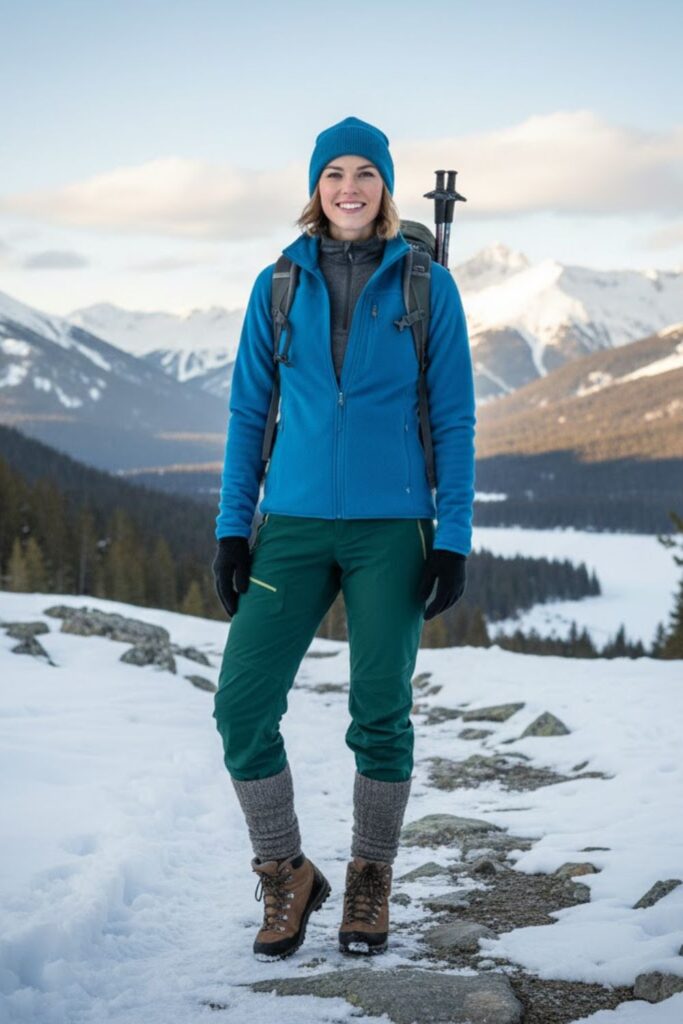
Start with a breathable thermal base layer to wick away moisture. Add a fleece jacket for insulation and pair it with durable trekking pants that allow flexibility and movement. Opt for materials like polyester or nylon blends that resist cold winds. Finish the outfit with waterproof boots and wool socks. This classic combination ensures warmth, comfort, and mobility for moderate to cold mountain treks.
2. Down Jacket with Waterproof Shell and Wool Leggings
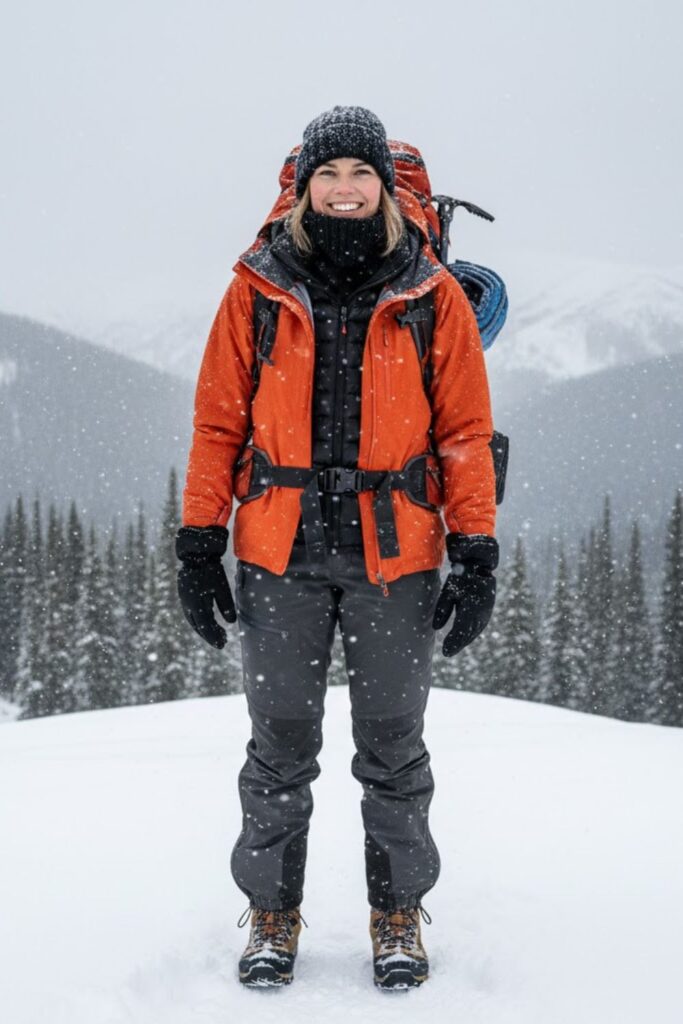
A lightweight down jacket paired with a waterproof outer shell keeps you warm without restricting movement. Combine it with thick wool leggings or insulated hiking pants for extra protection. Add a neck warmer and insulated gloves for full coverage. This outfit is ideal for cold-weather trekking where temperatures drop below freezing, keeping you cozy and dry even in snowfall.
3. Softshell Jacket with Convertible Hiking Pants
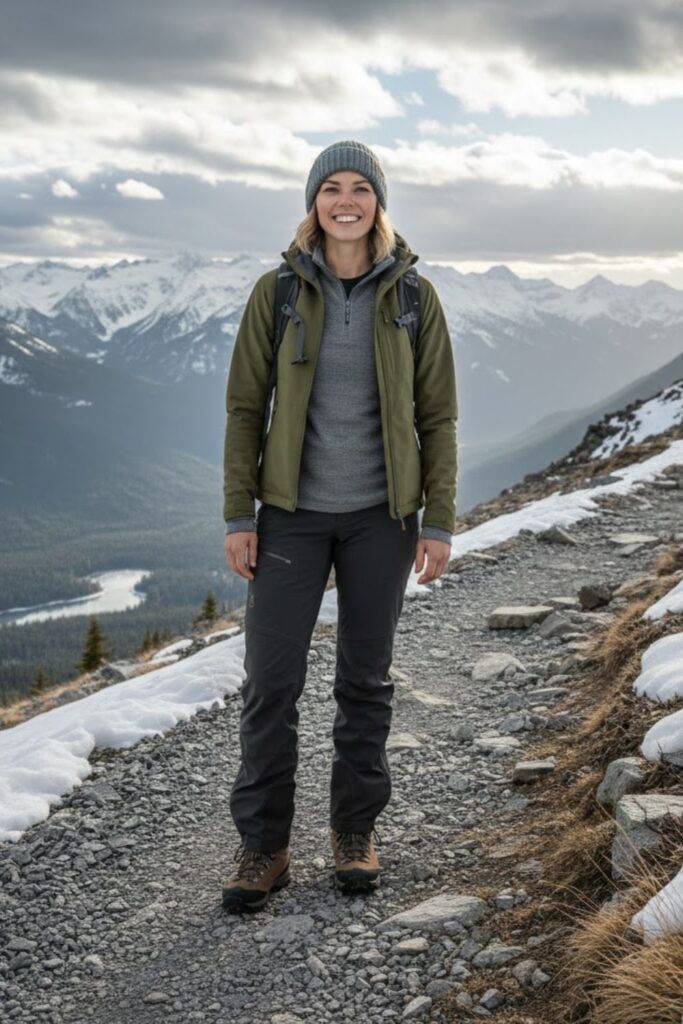
A softshell jacket offers excellent wind resistance and flexibility. Match it with convertible hiking pants that can adjust to changing temperatures — zip off the lower part if you heat up during steep climbs. Add a merino wool base layer underneath to regulate body temperature. This outfit works great for high-altitude trekking where weather can shift quickly from cold to mild.
4. Insulated Vest with Long-Sleeve Base Layer and Cargo Pants
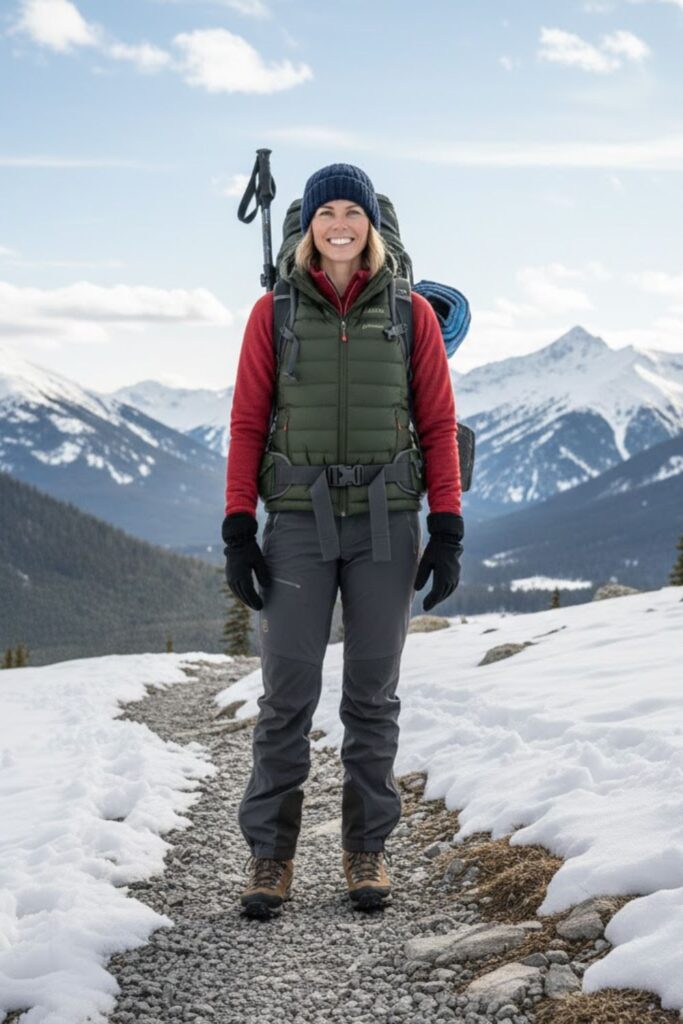
An insulated vest provides warmth without bulk, making it perfect for active winter trekking. Layer it over a thermal long-sleeve top and pair with high-performance cargo pants that offer multiple pockets for storage. Add a wool beanie and waterproof gloves for full protection. This combination provides warmth for the torso while keeping your arms free for movement on rough terrain.
5. Waterproof Parka with Thermal Leggings and Gaiters
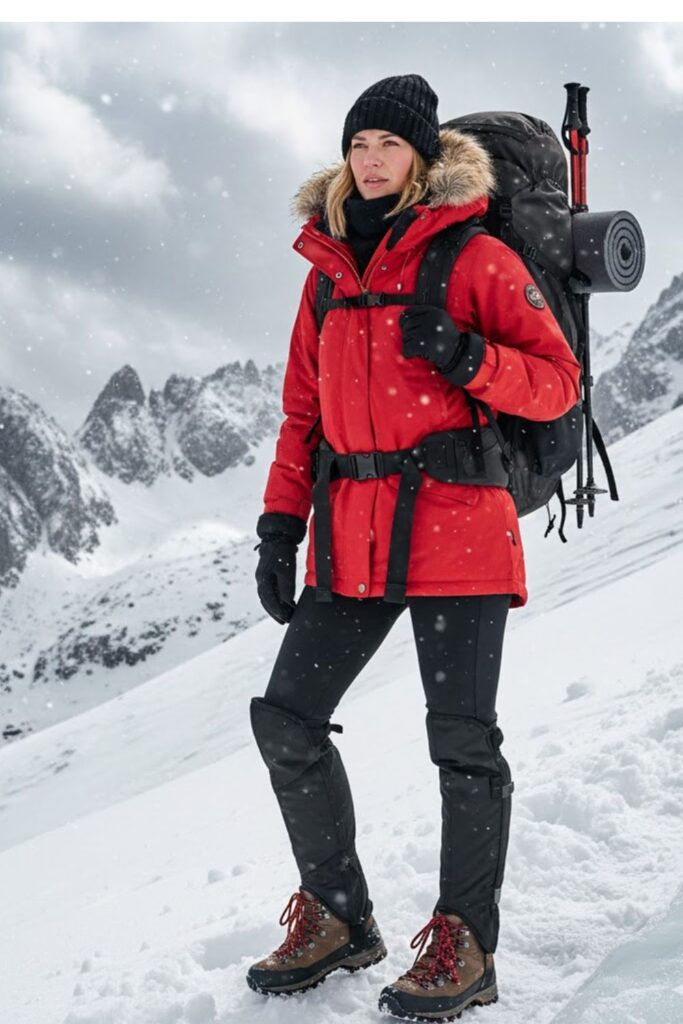
For extremely cold mountain conditions, a waterproof parka is essential. Pair it with fleece-lined leggings and add gaiters to protect your lower legs from snow. Choose insulated hiking boots with strong grip for slippery trails. This outfit not only keeps you warm but also shields you from wind and moisture — ideal for snow-heavy trekking routes.
6. Layered Fleece Hoodie with Insulated Pants
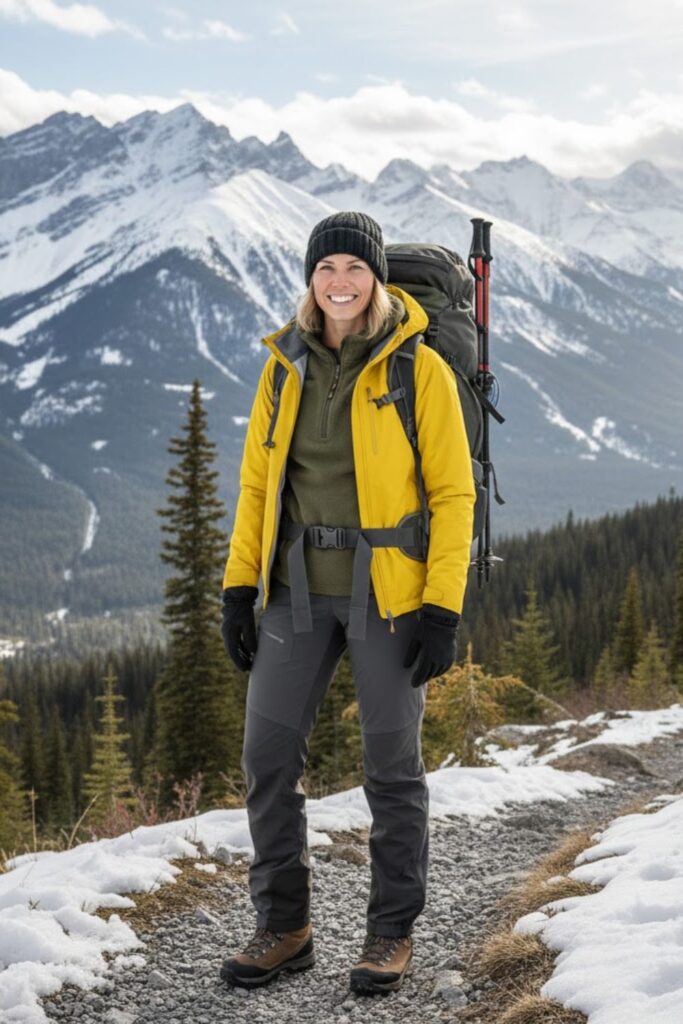
A fleece hoodie adds cozy comfort while keeping heat locked in. Combine it with insulated pants designed for cold-weather trekking. Make sure both pieces are breathable to prevent overheating during long climbs. Add a moisture-wicking base layer underneath and a lightweight waterproof jacket on top. This layered outfit provides balance and protection for long winter hikes.
7. Puffer Jacket with Merino Wool Base and Hiking Leggings
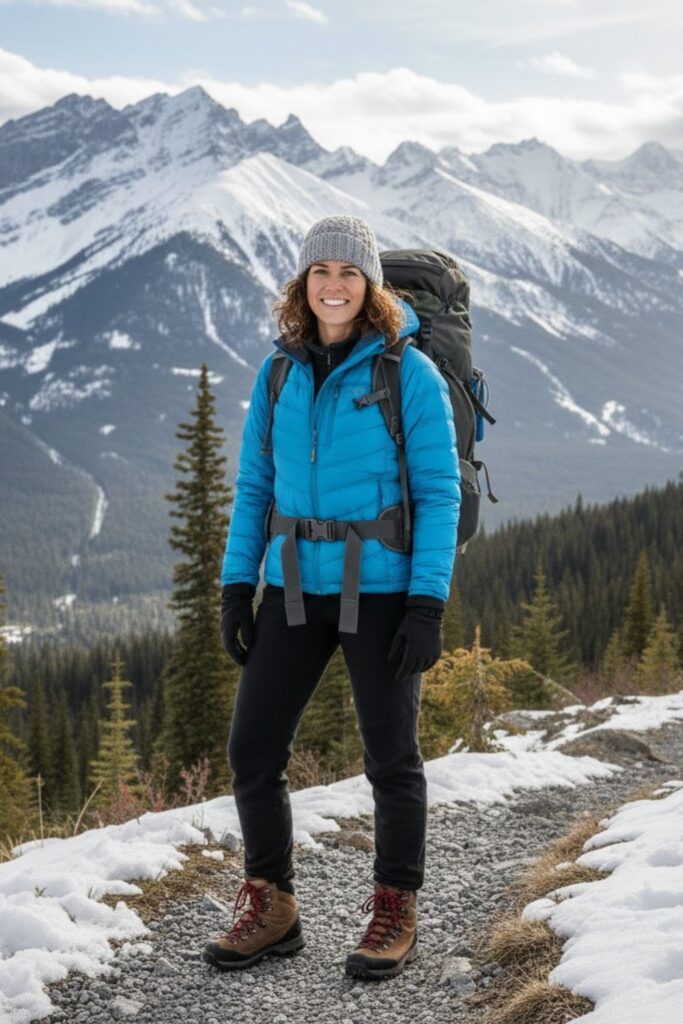
A puffer jacket is perfect for mountain trails where temperatures dip below zero. Wear it over a merino wool base layer to stay dry and insulated. Pair it with thick hiking leggings that stretch for comfort. Add mid-calf hiking boots for ankle support. This look combines warmth with mobility, ensuring you can trek comfortably even on frosty days.
8. Lightweight Windbreaker with Insulated Overalls
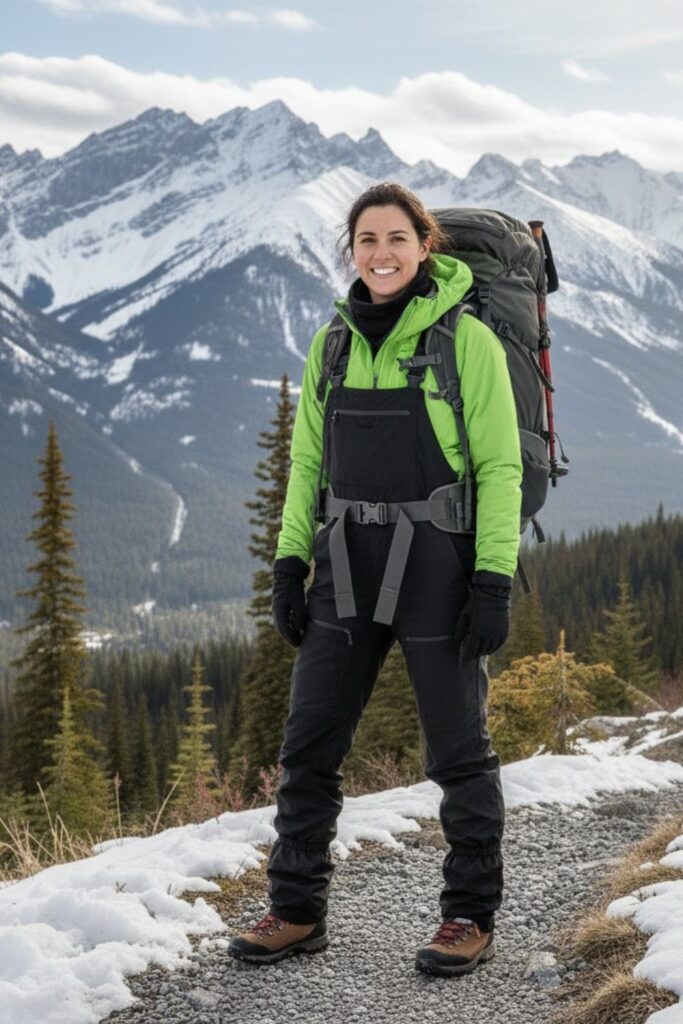
A windbreaker adds an outer shield against cold gusts while keeping your outfit breathable. Pair it with insulated overalls to trap warmth and maintain flexibility. This setup is especially great for treks involving snow or icy paths. Add thermal gloves and a neck gaiter to complete your mountain-ready outfit.
9. Fleece Pullover with Waterproof Pants and Hiking Boots
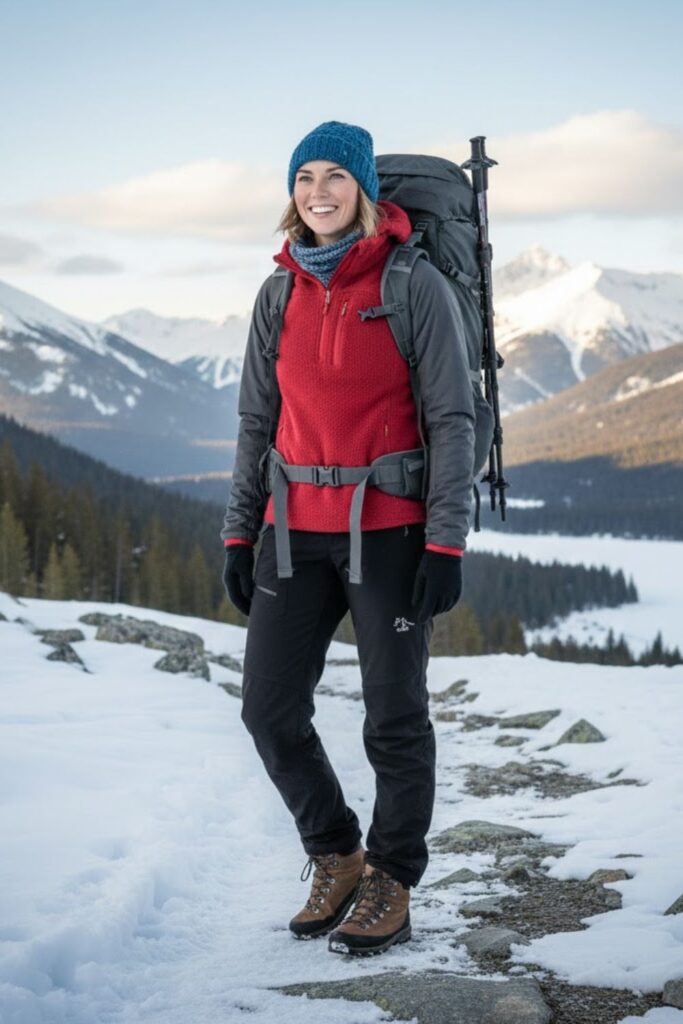
A fleece pullover is an excellent mid-layer for chilly hikes. Pair it with waterproof hiking pants that keep your lower body dry in snow or mud. Choose sturdy hiking boots with thick soles for grip and insulation. Add a thermal cap and scarf to prevent heat loss. This outfit strikes a good balance between casual comfort and performance wear.
10. Quilted Jacket with Layered Tops and Snow Pants
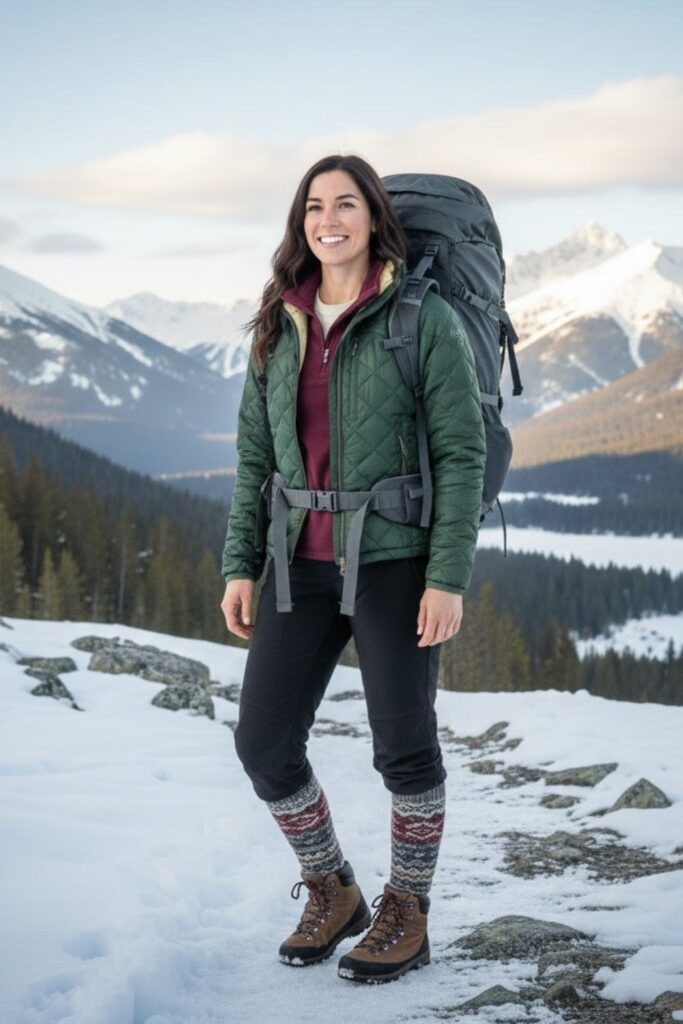
A quilted jacket provides both warmth and flexibility. Layer a long-sleeve top and a thermal tee underneath for maximum insulation. Match it with snow pants that protect against wet and cold conditions. Add knee-high socks and water-resistant hiking boots. This combination is perfect for long treks through snowy mountain trails.
11. Fleece Lined Parka with Cargo Leggings
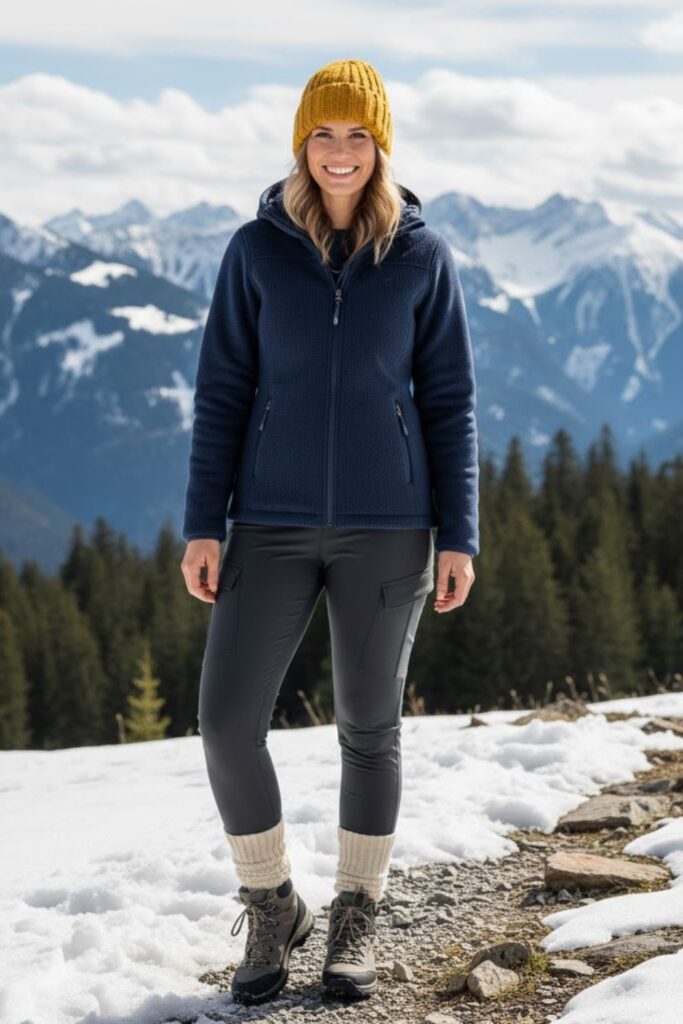
A fleece-lined parka offers incredible warmth while maintaining a sleek, fitted silhouette. Combine it with cargo-style leggings that are thick, stretchy, and practical. Add ankle boots and a wool hat for an effortlessly functional trekking look. This outfit is great for cold but dry conditions where you need insulation without too much bulk.
12. Long Down Coat with Thermal Joggers
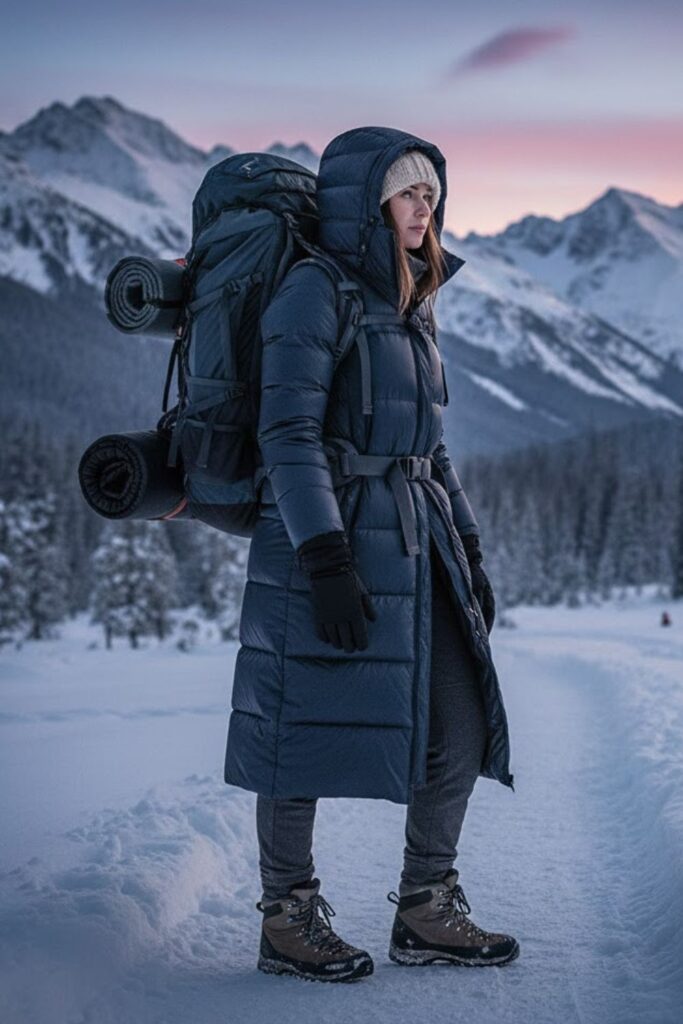
A long down coat keeps your entire body shielded from the cold while remaining lightweight. Pair it with thermal joggers for comfort and warmth. Add a fleece-lined beanie and gloves to keep extremities warm. This look is excellent for mountain trekking that includes long rest stops or camping in cold areas, where extra coverage is beneficial.
13. Waterproof Shell Suit with Wool Base and Hiking Socks
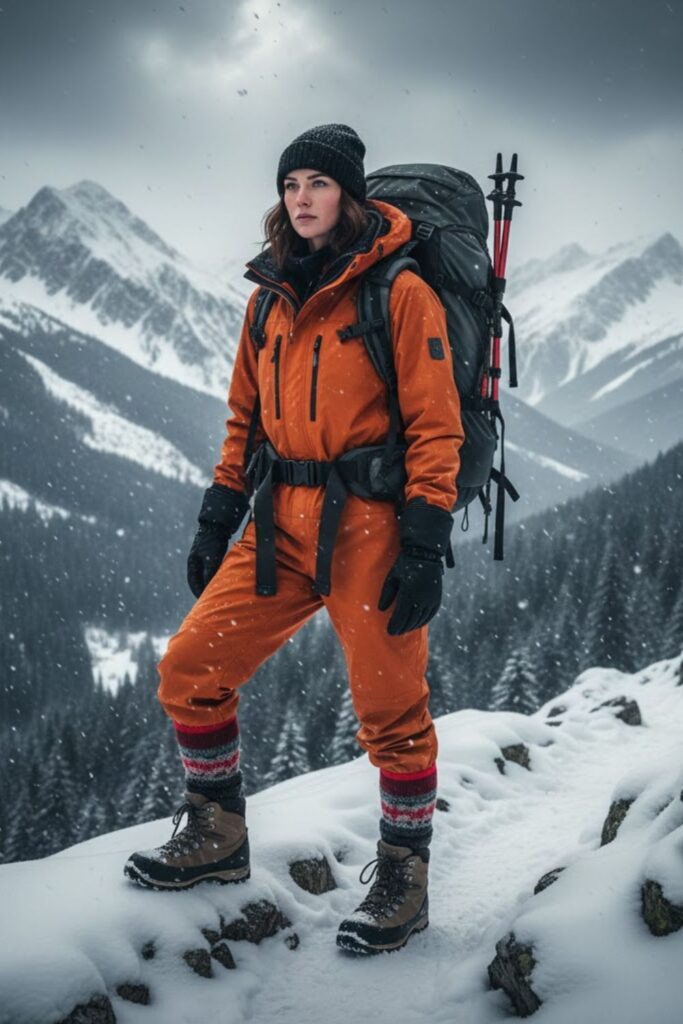
For serious trekking in snowy or wet conditions, go for a full waterproof shell suit layered over a wool base. The shell protects you from wind and moisture, while the wool base keeps you warm and sweat-free. Add thick hiking socks and waterproof boots. This is the ultimate protective gear setup for rugged winter mountain treks.
14. Puffy Vest with Thermal Sweater and Tapered Pants
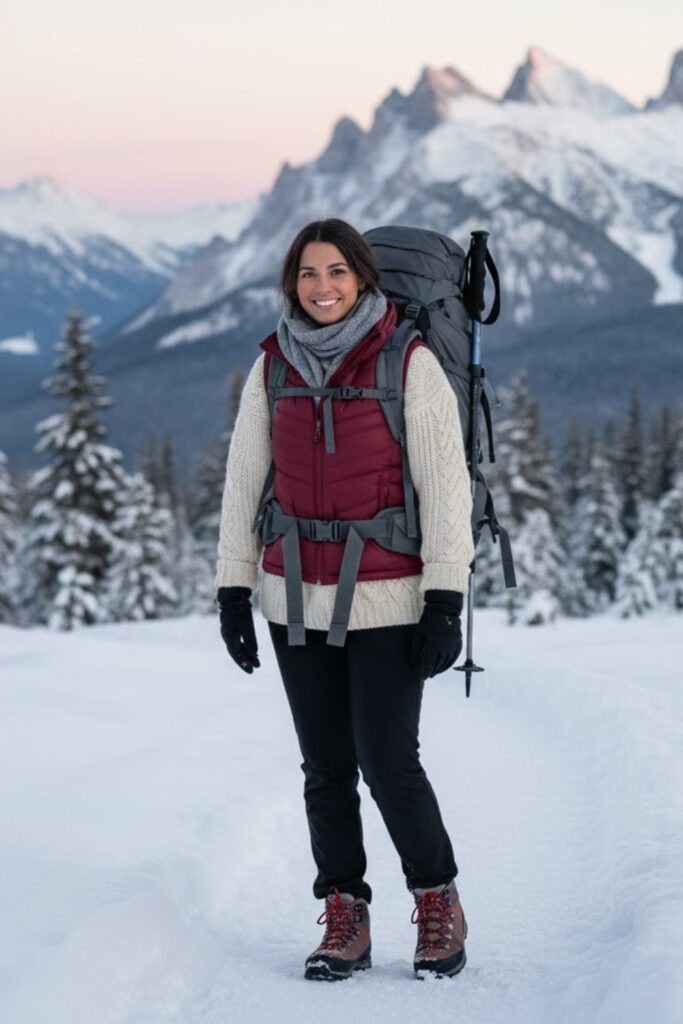
A puffy vest gives warmth to your core while allowing freedom of movement. Layer it over a thermal sweater and pair it with tapered trekking pants that fit comfortably into your boots. Add gloves and a soft wool scarf for style and warmth. This outfit works well for light to moderate trekking during cold mornings or evenings.
15. Heated Jacket with Compression Base Layer and Snow Boots
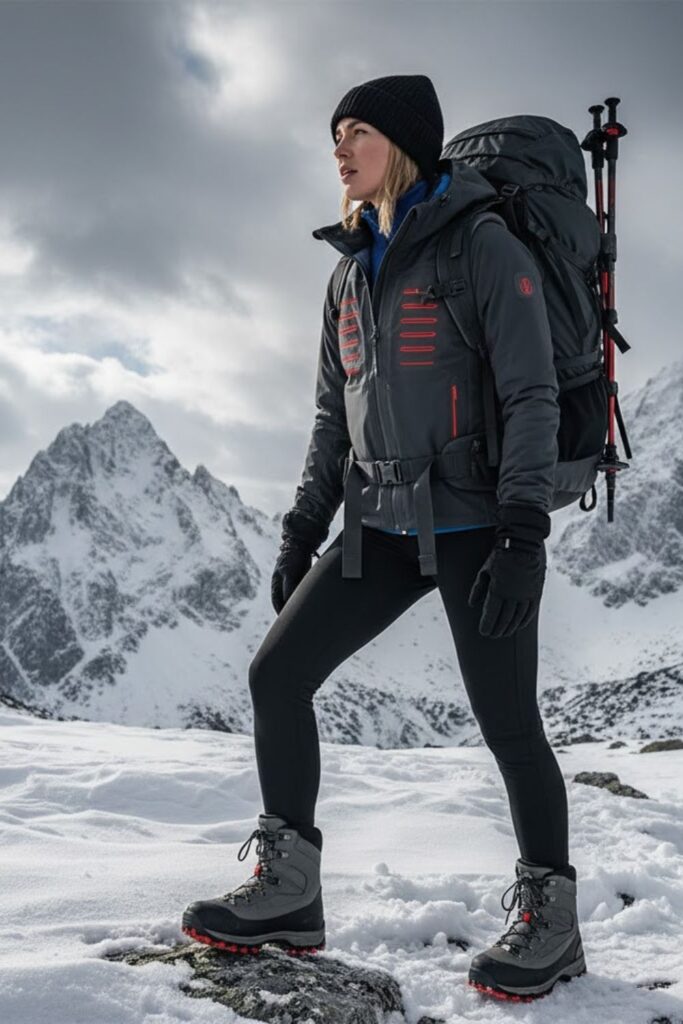
For those who love high-tech gear, a battery-powered heated jacket can make winter trekking much more comfortable. Layer it over a compression base layer to regulate heat efficiently. Pair with insulated snow boots and water-resistant leggings. This setup keeps you warm even in extreme cold, perfect for high-altitude or long-duration winter mountain treks.
Practical Tips for Winter Trekking Outfits
- Layer smartly: Always use three layers — base, mid, and outer — for optimal heat control.
- Choose moisture-wicking fabrics: Avoid cotton; go for merino wool or synthetic fibers.
- Keep extremities warm: Use thermal socks, gloves, and headgear to prevent frostbite.
- Prioritize waterproof gear: Snow and slush can quickly soak through thin fabrics.
- Pick insulated boots: Proper footwear ensures grip, warmth, and stability on rough terrain.
- Don’t overdress: You’ll generate body heat while trekking, so wear breathable layers you can remove easily.
- Add reflective elements: If trekking in low light, wear reflective jackets or patches for visibility.
FAQ
1. What should I wear for mountain trekking in winter?
Wear layered clothing: a thermal base, an insulating mid-layer, and a waterproof outer shell. Add gloves, hat, and insulated boots.
2. Are jeans suitable for winter trekking?
No. Jeans absorb moisture and can become heavy and cold. Opt for water-resistant or quick-drying trekking pants.
3. How can I stay warm without overheating during a hike?
Layering is key. You can remove or adjust layers depending on your activity level and temperature.
4. What kind of shoes are best for winter mountain trekking?
Waterproof hiking boots with good ankle support and thick soles for traction on icy or rocky paths.
5. Can I wear leggings for trekking in winter?
Yes, but choose thermal or fleece-lined leggings designed for outdoor activities to keep warm and dry.
6. How do I protect my hands and feet from frostbite?
Use insulated gloves and thermal socks. Consider hand warmers for extreme conditions.
7. What colors are best for winter trekking outfits?
Neutral and dark tones hide dirt, while bright accents improve visibility. Mix both for safety and style.
Final Words
Trekking through mountains in winter is both thrilling and rejuvenating — the crisp air, snow-covered peaks, and quiet beauty make every moment unforgettable. But comfort and safety depend heavily on your outfit. These 15 trekking outfit ideas for women in the mountains during winter will help you dress smartly for every condition — from light snowy trails to extreme cold-weather climbs.
The key is balance: warmth without bulk, protection without restriction, and style without sacrificing comfort. Invest in good-quality gear, layer strategically, and always keep your essentials waterproof. With the right outfit, you’ll not only conquer the trail but also enjoy every step in confidence, warmth, and style.