
Spider plants are beloved for their vibrant green foliage, easy care, and lively personality. With their arching leaves and small plantlets, they make a fantastic addition to any room, adding natural texture, movement, and energy.
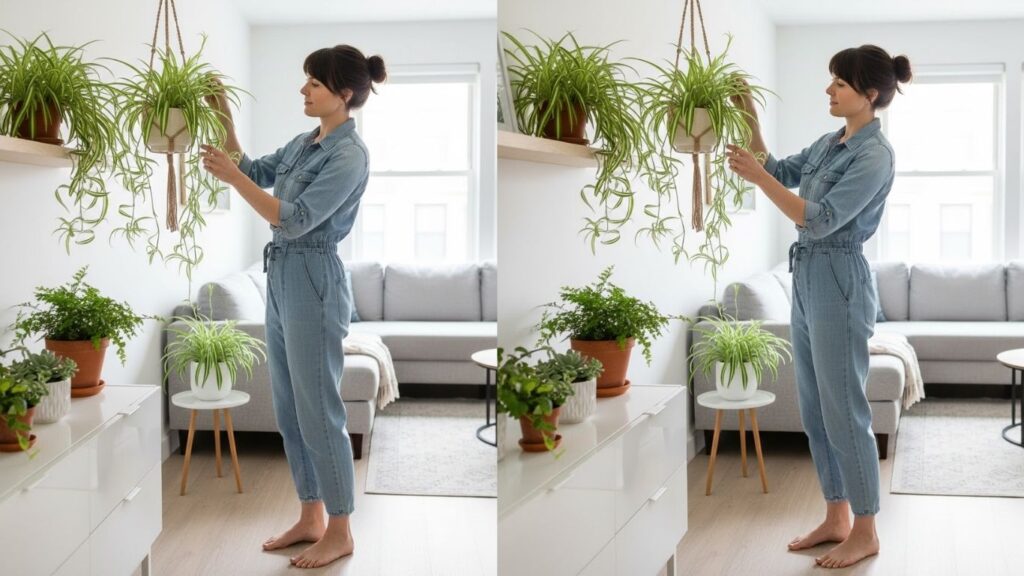
Whether your space is modern, cozy, minimalist, or eclectic, spider plant decor enhances it with cheerful greenery. These adaptable plants thrive in a variety of conditions and look beautiful in creative displays that boost ambiance and aesthetic appeal.
Suggested Items to Elevate Your Spider Plant Decor
- Decorative Hanging Planters
- Ceramic Accent Pots
- Wooden Tiered Plant Stand
- LED Grow Light Clip
- Self-Watering Indoor Planter
Why Spider Plants Make Beautiful Decor
Spider plants are ideal for decor because they are resilient, visually dynamic, and suited to many styles. Their cascading leaves and baby plantlets create a sense of motion that enlivens shelves, tables, windowsills, and hanging displays. They thrive in bright, indirect light but adapt well to moderate conditions, making them great for beginners and seasoned plant lovers alike.
Styling spider plants involves balancing height, layer, and texture throughout a room. You can mix them with other houseplants for lush clusters, isolate them as statement pieces, or incorporate them into creative art-inspired displays. Their low maintenance needs and air-purifying qualities also make them appealing additions to bedrooms, living rooms, offices, kitchens, and more. Below are creative ideas to help you bring spider plant decor into your everyday spaces.
15 Spider plant decor ideas
1. Classic Hanging Spider Plant Display
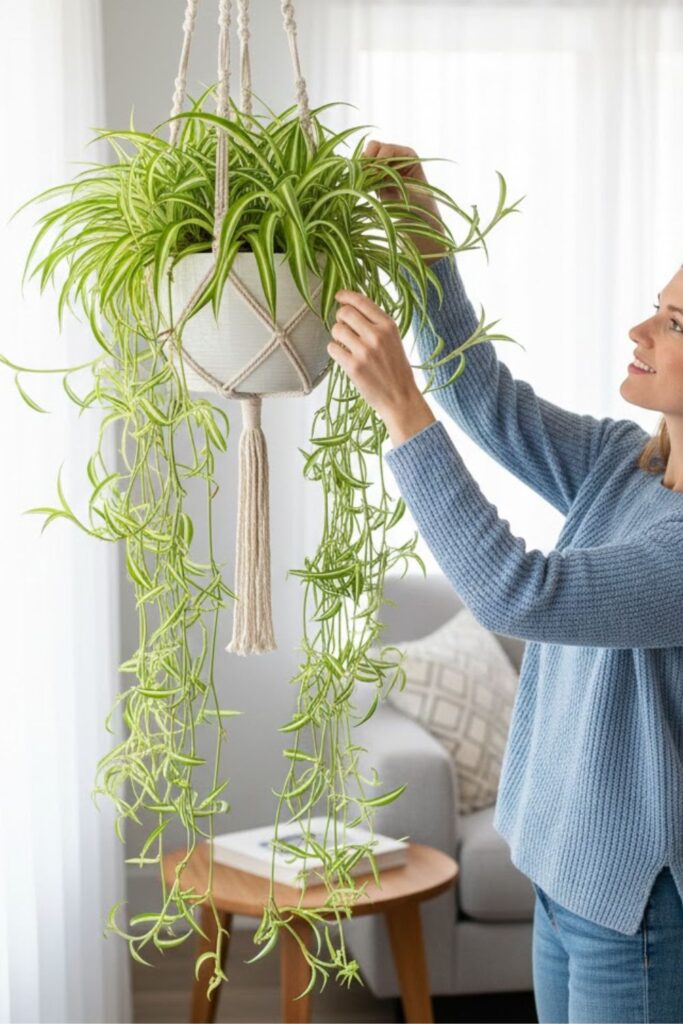
Create a classic and captivating hanging spider plant display by suspending a healthy spider plant in a decorative planter near a bright window. The trailing spiderettes, or baby plantlets, cascade down like gentle green ribbons, adding soft movement and life to the room.
Use a stylish hanging planter made of natural materials like woven rope or macramé to introduce warmth and texture. This setup works especially well in areas with moderate to bright light, such as near patio doors or kitchen windows. Hanging displays free up valuable surface and floor space, making them perfect for smaller living rooms, bedrooms, or home offices. When the plant is elevated, its leaves and plantlets trail gracefully, transforming ordinary vertical space into a lively green feature that feels both effortless and elegant.
2. Spider Plant on a Floating Shelf
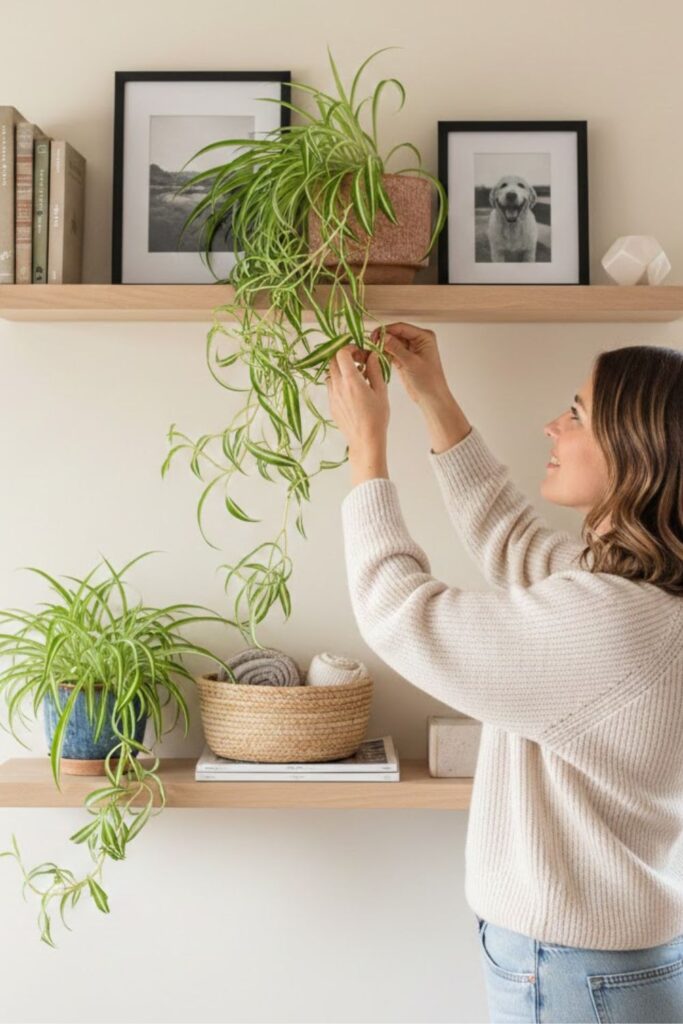
Decorating a floating shelf with a spider plant turns a blank wall into a layered, lush highlight. Place a medium-sized spider plant in a decorative pot on a shelf alongside books, framed photos, or small decorative objects to create cohesive visual interest.
Spider plants have a natural cascade, so placing them slightly back on the shelf allows the arching foliage to fan forward beautifully. Combining upright elements like books with the plant’s trailing form creates balance and depth. You can install multiple shelves at staggered heights to echo the plant’s organic movement. This idea works especially well in living rooms or hallways, where empty wall space needs personality. The result is a curated living display that feels cozy, vibrant, and intentional—perfect for contemporary or traditional interiors alike.
3. Spider Plant as a Desk Companion

A spider plant on your desk brings refreshing greenery to your workspace without overwhelming limited surface real estate. Choose a compact or young spider plant in a decorative ceramic pot that complements your workspace color palette.
Spider plants are particularly effective in home offices because they thrive in bright, indirect light — exactly what most workstations near windows or well-lit interiors provide. Their arching leaves soften screens, keyboards, and straight lines, introducing natural curves that enhance focus and calm. Pair the plant with stationery or a small desk lamp to create a visually balanced workstation. Over time, the flowing foliage moves outward, adding a natural touch that makes your workspace feel fresh and inviting without cluttering your functional space.
4. Stairway Spider Plant Trail
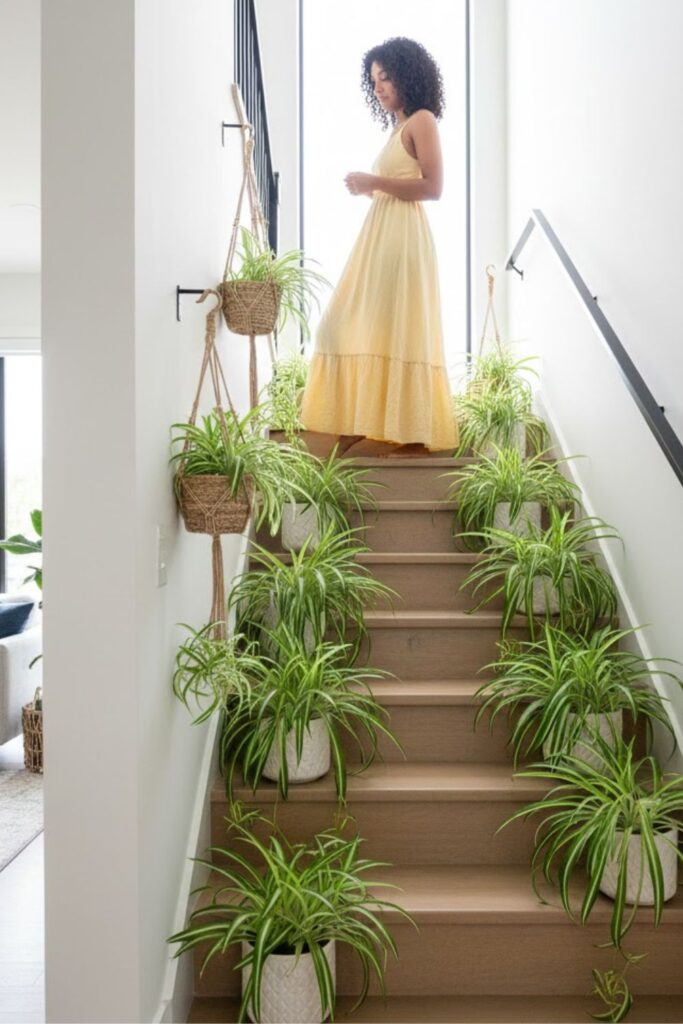
Elevate your staircase design by lining steps or railings with potted spider plants. Use lightweight planters on each step platform or secure small hanging baskets near the railings, allowing the cascading foliage to trail down the stair pathway.
This idea turns an often overlooked architectural feature into a living ascent of greenery. The continuity of spider plants from step to step creates a natural trail that invites movement and life into transitional spaces. Use planters in similar tones or materials to maintain a cohesive look as you move up and down. Spider plants’ versatile nature ensures they adapt to stairway lighting, whether near windows or ambient interior light. This showcase makes the staircase feel intentional, vibrant, and harmoniously connected to other living spaces.
5. Living Entryway with Spider Plants
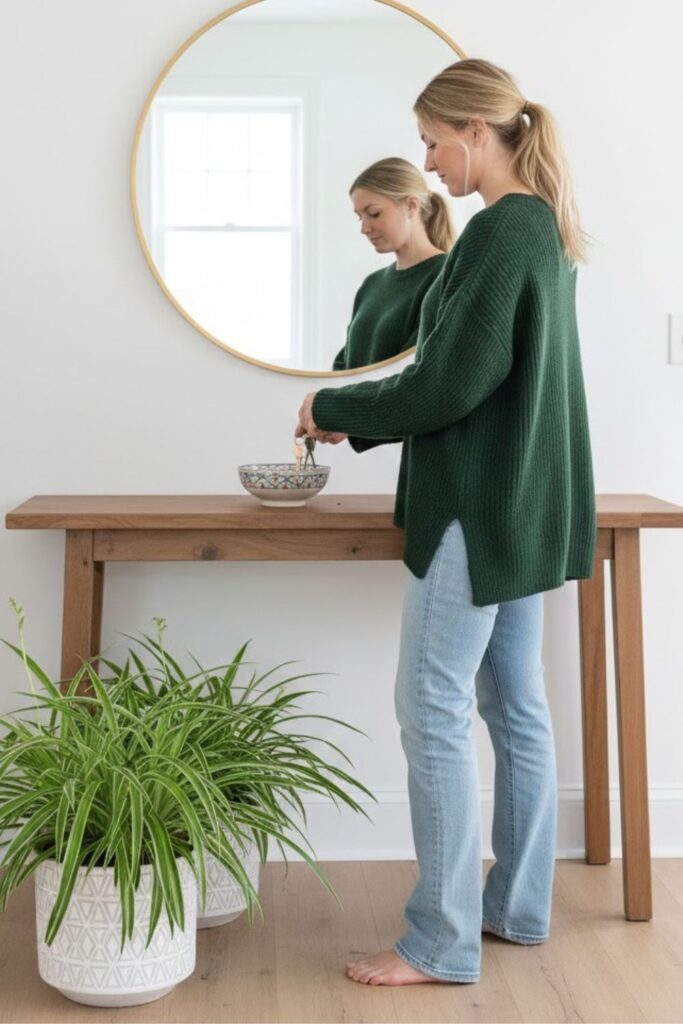
An entryway sets the tone for your home, and spider plants can make it welcoming and fresh. Place one or two spider plants in decorative pots near your console table or coat rack—a pair creates symmetry while a single striking piece can anchor the space.
Choose containers that resonate with your interior style—textured ceramics for boho spaces, smooth neutral tones for minimalist looks, or bold colors for eclectic interiors. Spider plants naturally soften hard edges and introduce an organic transition between the outdoors and your living spaces. Their bright, arching foliage evokes energy and life, offering a warm greeting for family and guests alike. Complement this with subtle accents like a bowl for keys or a decorative mirror to make the entryway feel polished and inviting.
6. Window Sill Spider Plant Garden
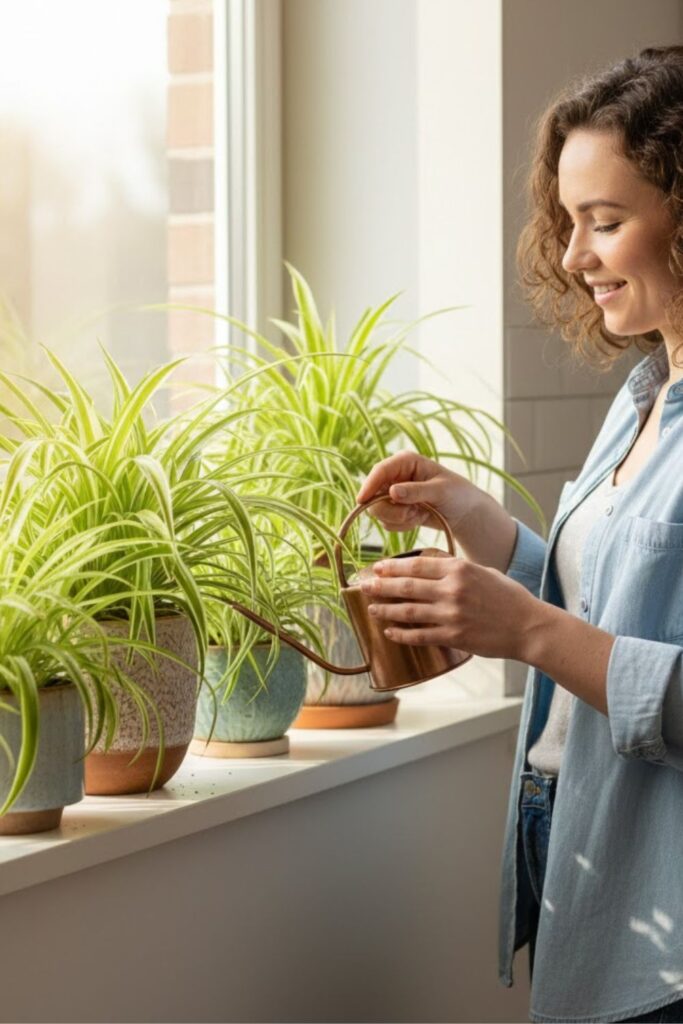
Turn your window sill into a mini spider plant garden by lining it with several small to medium spider plants in coordinating pots. Because windowsills receive natural light throughout the day, this spot allows the plants to thrive and maintain vibrant growth.
Spacing plants evenly and selecting pots in similar tones creates a cohesive look, while each plant’s natural shape adds depth and movement. This arrangement works exceptionally well in kitchens, sunrooms, and living rooms with generous light. The cascading leaves soften sunlight and cast delightful shadows, breathing life into the wall below. Rotating plants periodically ensures even light exposure and keeps foliage lush. Overall, this garden-like display celebrates the beauty of spider plants while framing your window in fresh greenery.
7. Spider Plant Coffee Table Accent
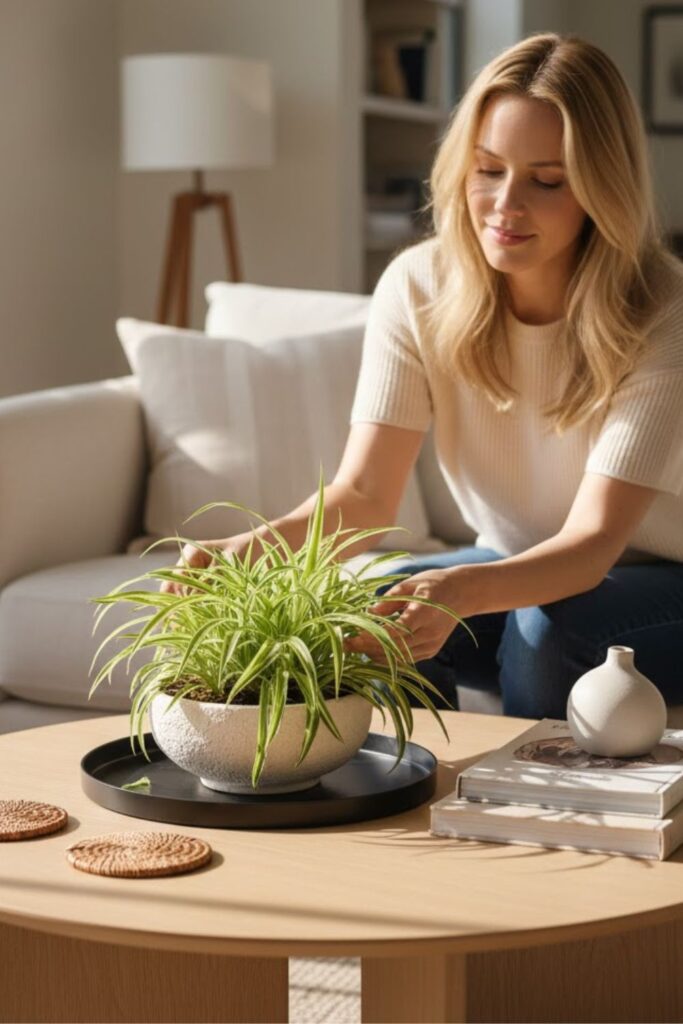
A spider plant makes a lively coffee table accent that brings life to your living room without dominating the surface. Place the plant in an attractive shallow pot or ceramic bowl, and surround it sparingly with décor elements like coasters, small books, or minimalist sculptures.
Choose a spider plant with shorter or more contained leaves to maintain table balance and avoid interference with daily use. The spill of foliage adds texture and visual interest to eye-level sightlines when sitting or entertaining. Pair it with a neutral tray or decorative base to define its space and keep the tabletop organized. This simple accent enhances your seating area, making your coffee table a focal point that feels cozy, organic, and intentionally styled.
8. Spider Plant Shelf Ensemble
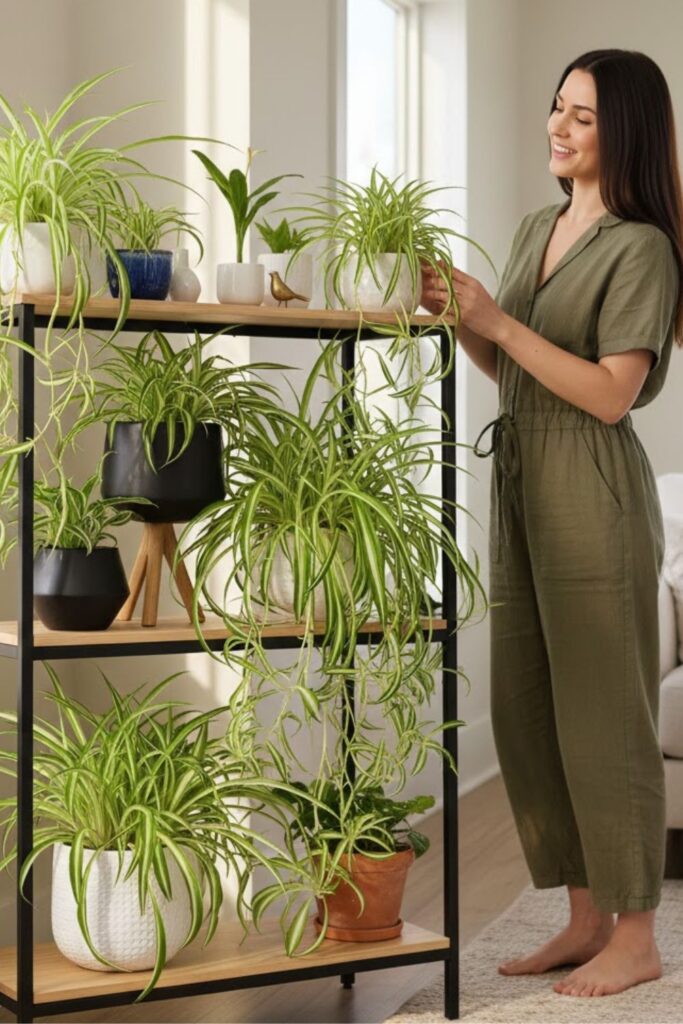
A group of spider plants arranged on a multi-tier shelf or plant stand creates a lush, layered display. Combine plants of varying sizes and pot styles for a textural arrangement that feels both abundant and artful.
Place larger spider plants on lower levels and smaller ones higher up to balance height and volume. This layered structure mimics a natural garden effect and introduces captivating visual rhythm. The cascading foliage from each shelf level overlaps gently, creating a leafy waterfall look. This style works beautifully near seating areas or as a statement in bedrooms and dining rooms. Finish the arrangement with subtle decorative accents like pebbles or figurines for added personality and cohesion.
9. Bathroom Spa Retreat with Spider Plants
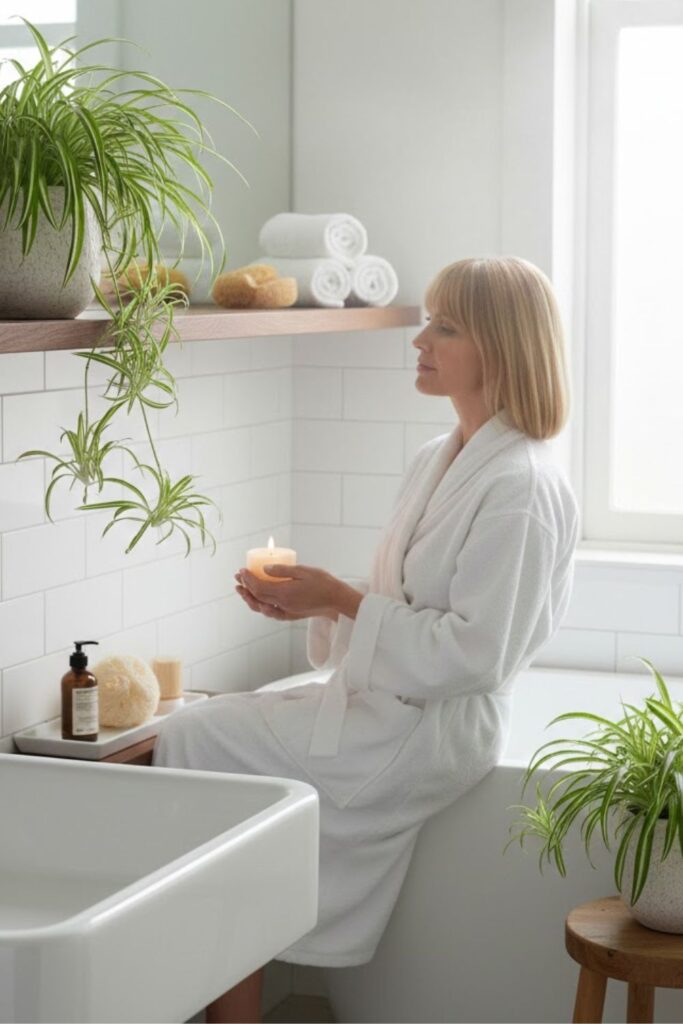
Spider plants thrive in the humidity of bathrooms and make excellent companions for spa-like decor. Place a spider plant on a floating shelf near the shower or above the sink to enhance moisture-friendly greenery.
The arching leaves soften tiled surfaces and introduce organic contrast to geometric lines. Because spider plants do well in moderate light, bathrooms without direct sunlight can still support lush growth. Choose waterproof planters or trays to protect surfaces. Combine this greenery with plush towels, candles, and natural textures like wood or stone to enhance the calming, rejuvenating vibe. A spider plant in the bathroom creates an inviting oasis where daily routines feel refreshing and serene.
10. Kitchen Spider Plant Freshness Corner
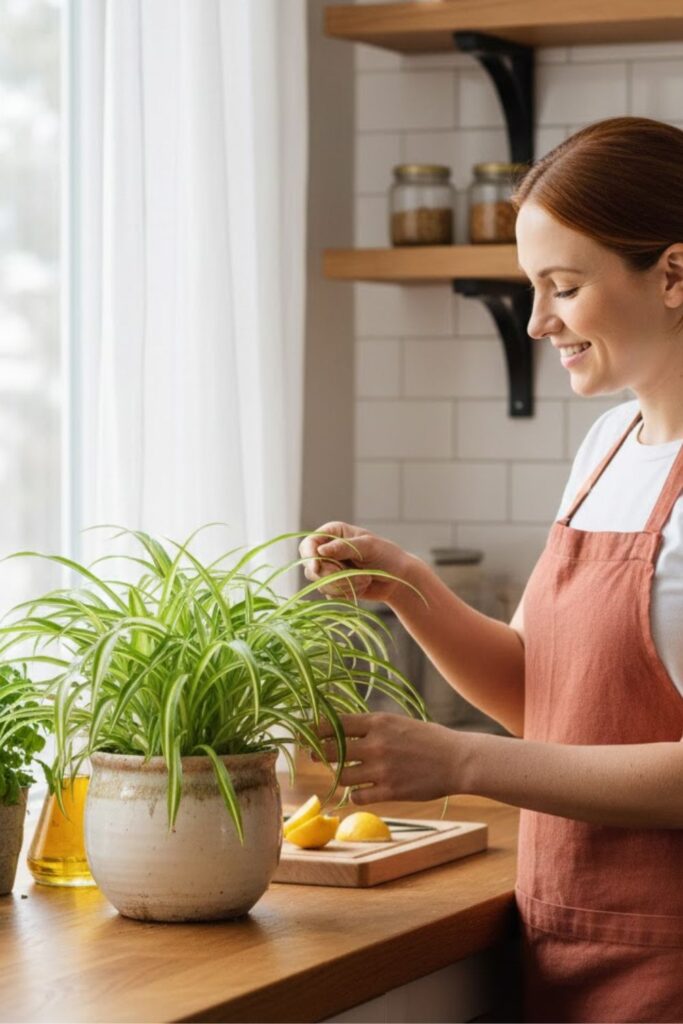
A spider plant in the kitchen adds color and natural freshness without demanding too much attention. Sit one on a countertop corner, window ledge, or open shelving where it can receive indirect light from nearby windows.
The lively foliage pairs beautifully with kitchen textures like wood, metal, and ceramic. Because spider plants are easy to care for, they fit well into busy areas where light may vary through the day. Position it near herbs or other kitchen plants to build a garden-inspired aesthetic. This simple greenery breathes life into meal spaces and helps create a more uplifting food preparation environment. Its cascading leaves also soften cabinets and hard surfaces, making kitchens feel more inviting.
11. Spider Plant as Room Divider Feature
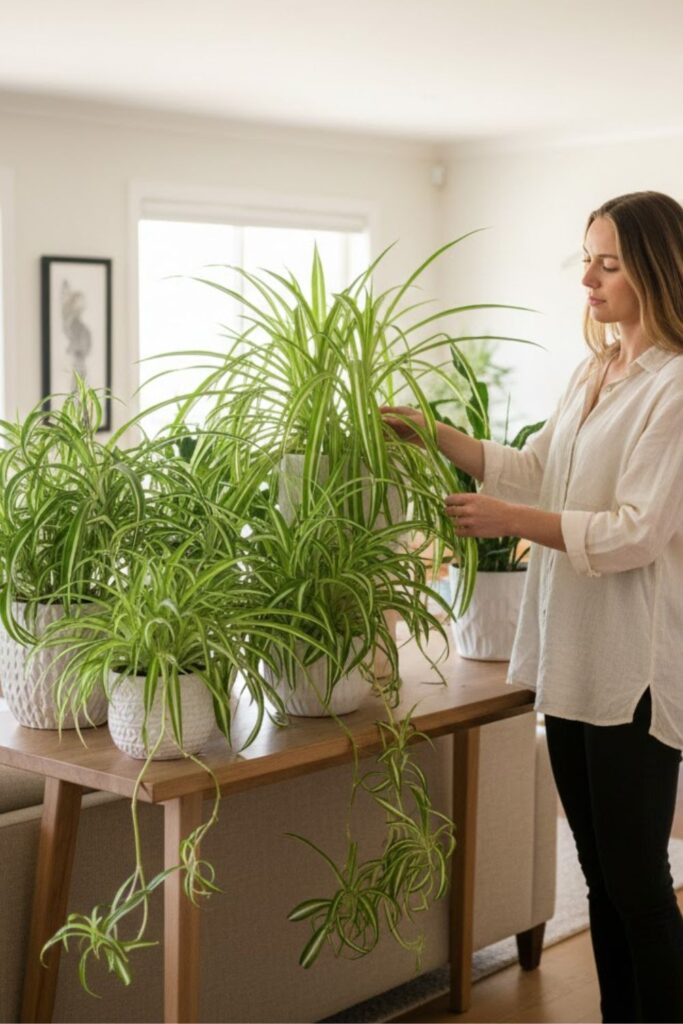
Create a natural room divider by placing several spider plants on a long console table or plant stand between two living spaces. The cascading foliage acts as a forgiving visual screen that maintains openness while offering separation.
This approach works especially well in open-plan homes where defined zones make the layout feel intentional. Varied pot sizes and slight spacing differences add depth without clutter. The lush green movement introduces energy and continuity between areas, whether dividing dining and living spaces or office and lounge zones. With proper lighting, the spider plants thrive and create a dynamic yet soft partition that enhances both functionality and aesthetic appeal.
12. Spider Plant Accent in Bedrooms
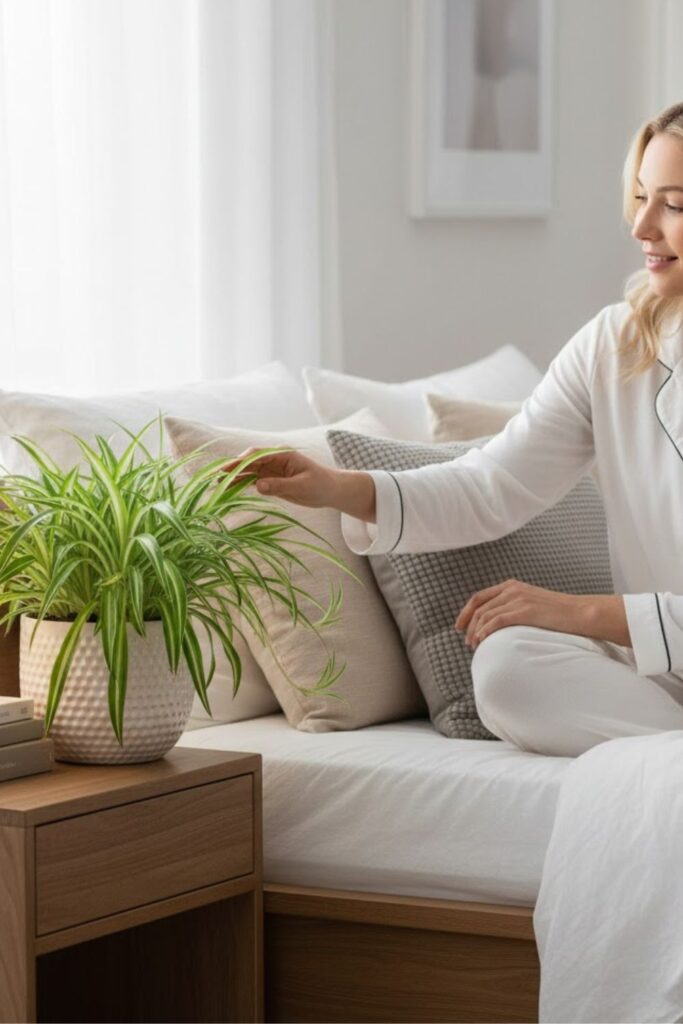
Bring serenity to your bedroom by adding a spider plant as a bedside accent. Place it on a nightstand or a small plant stand near your bed. Choose a pot style that matches your bedroom’s color scheme for a cohesive feel.
Bedroom spider plants add gentle green hues that soothe the mind and draw confidence from nature. Their flowing leaves help soften structural elements and balance geometric furniture lines. Spider plants can also help improve air quality, contributing to a calm sleep environment. Pair it with soft linens, textured pillows, and ambient lighting for a tranquil bedroom sanctuary where natural and restful design come together beautifully.
13. Spider Plant Wall Frame Garden
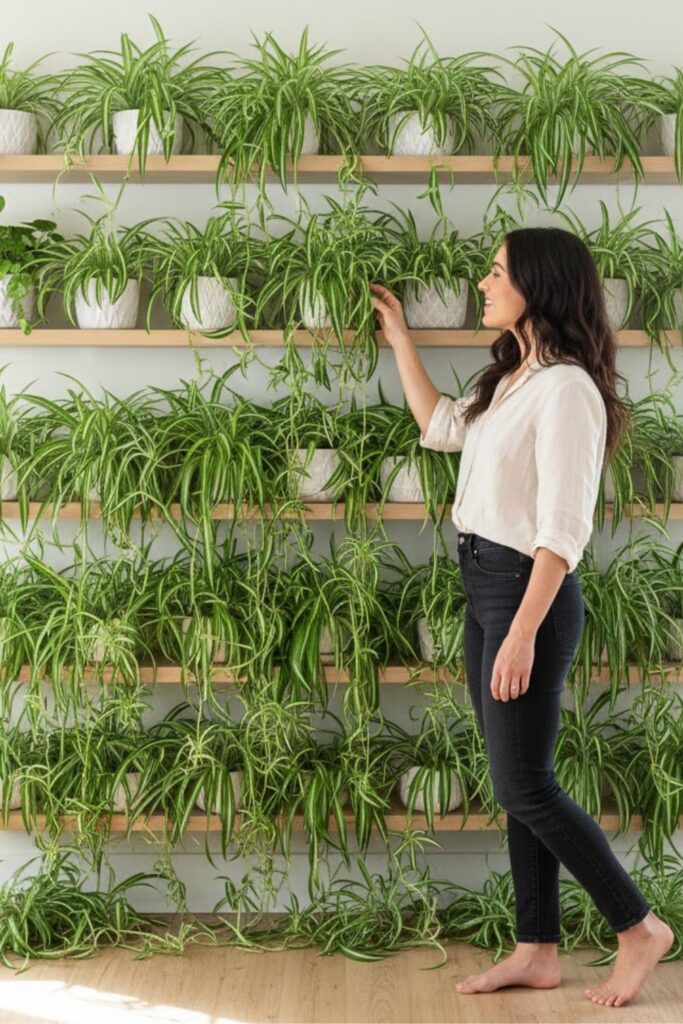
Transform a blank wall into a living gallery by mounting shallow plant shelves or wall frames and filling them with cascading spider plants. As the foliage drapes down, it creates a lush vertical display that feels like living art.
Choose sturdy wall mounts and coordinate pot styles to align with your décor. This idea works especially well in living rooms and dining areas where vertical space can elevate visual interest. The layered foliage introduces movement and depth while avoiding clutter on tables and floors. Regular trimming and rotation help maintain balance and shape. A spider plant wall garden turns empty walls into vibrant green canvases that infuse energy into your interior.
14. Seasonal Plant Rotations with Spider Plants
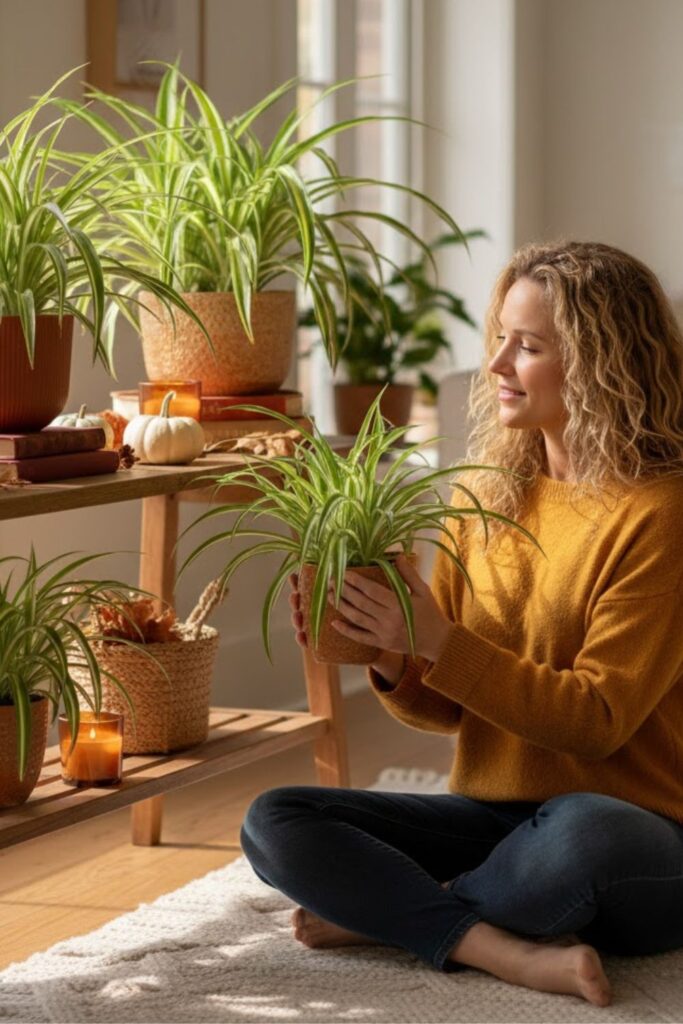
Keep your decor feeling fresh by rotating spider plants seasonally. Use different pot colors, placements, and subsidiary decor elements to reflect the mood and palette of each season.
In spring, pair spider plants with pastel pots and light textiles. In fall, introduce warm hues and rustic accessories. Seasonal rotation invigorates your space and encourages creativity. It also allows you to monitor each plant’s growth and adjust care based on environmental conditions. This approach makes house plant decor dynamic and alive rather than static, keeping your home feeling engaging and stylish year-round.
15. Mixed Greenery Cluster with Spider Plants
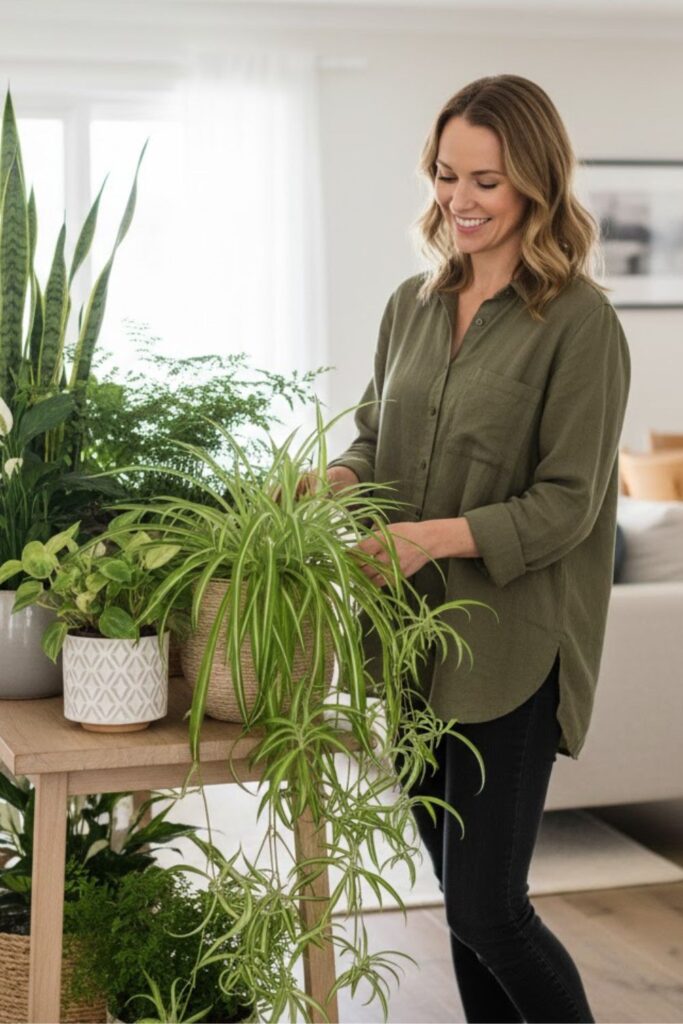
Create a lush greenery cluster by mixing spider plants with complementary houseplants such as ferns, snake plants, or peace lilies. Arrange these on a wide plant stand, console table, or windowsill to build a layered, vibrant display.
Contrasting leaf shapes and growth patterns make the cluster feel rich and balanced. Spider plants’ cascading leaves frame upright plants beautifully, creating a garden-like scene that feels cultivated yet natural. This ensemble works well in spacious living rooms, sunrooms, or large bedrooms. Ensure each plant has compatible light and watering needs to maintain harmonious growth. This multi-plant approach brings depth, texture, and a sense of abundant life into your home’s decor.
Why Spider Plant Decor Enhances Your Home
Spider plants are more than attractive greenery. They improve air quality, reduce stress, and introduce natural elements that boost well-being. Their flexible nature lets them fit into virtually any room, from cozy corners to bold focal arrangements.
Plant Care Tips for Vibrant Spider Plants
Provide bright, indirect light; water when the top inch of soil feels dry. Use well-draining soil and containers with drainage holes. Trim brown tips and remove spent plantlets to keep foliage fresh. Rotate plants for even growth and wipe leaves to remove dust.
Frequently Asked Questions
How do spider plants improve indoor spaces?
Spider plants add visual vibrancy, improve air quality, and create a calming environment.
What kind of light do spider plants need?
Bright, indirect light is ideal, though they tolerate moderate light well.
How often should spider plants be watered?
Water when the top soil feels dry; avoid waterlogging.
Can spider plants be hung outdoors?
Yes — in shaded or partially shaded outdoor areas without direct harsh sun.
Do spider plants help reduce stress?
Greenery, like spider plants, can positively influence mood and reduce stress indoors.
Final Words
Spider plant decor blends style, nature, and serene energy into any home. With creative arrangements, thoughtful placement, and consistent care, spider plants breathe life into spaces from ceilings to corners.
These green companions turn ordinary rooms into welcoming, vibrant environments that feel both refreshing and beautifully styled. Let your home flourish with these living ideas.