
Plants have the power to transform ordinary shelves into vibrant, living design statements. Whether you have floating shelves, built-in bookcases, or corner units, adding greenery brings warmth, texture, and personality to your home. Plant shelf decor is a creative way to display your love for nature without sacrificing floor space.
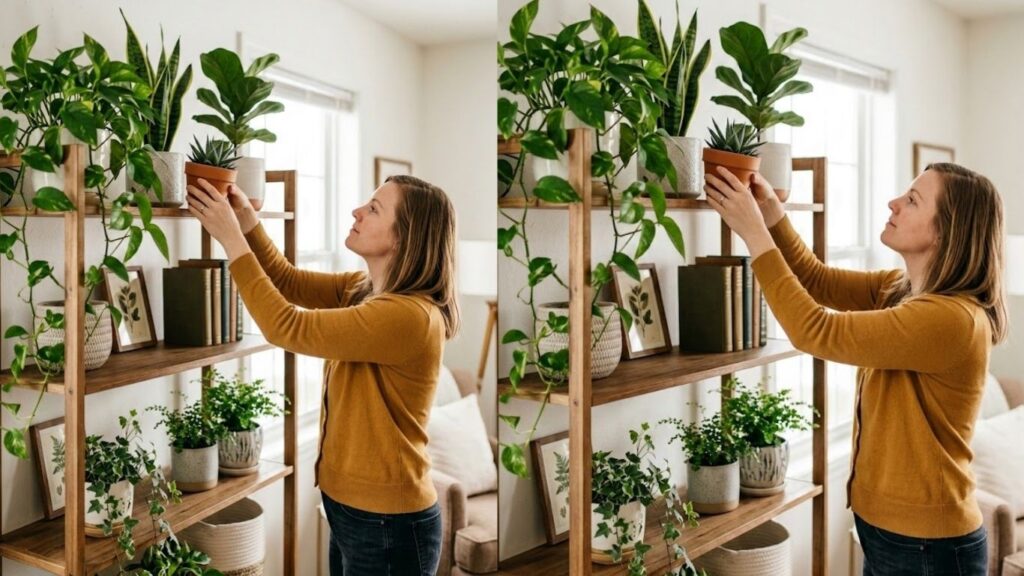
In this guide, you’ll discover inspiring plant shelf decor ideas that combine beauty and practicality. From minimal arrangements to lush layered displays, these ideas will help you style shelves in a way that feels balanced, fresh, and uniquely yours.
Essential Items for Styling Plant Shelves
Before designing your plant shelf decor, having the right accessories can make styling easier and more cohesive. Here are five helpful products to consider:
- Ceramic Plant Pots with Drainage
- Wooden Floating Wall Shelves
- Decorative Plant Mister Spray Bottle
- LED Indoor Grow Light Strip
- Woven Basket Planter Covers
Creative Ways to Style Plant Shelf Decor at Home
Plant shelf decor allows you to experiment with height, texture, and color in a compact area. Shelves give plants visibility while keeping them organized and accessible. Below are detailed and practical ideas to help you design beautiful shelf displays that enhance any room.
1. Layered Greenery with Different Heights
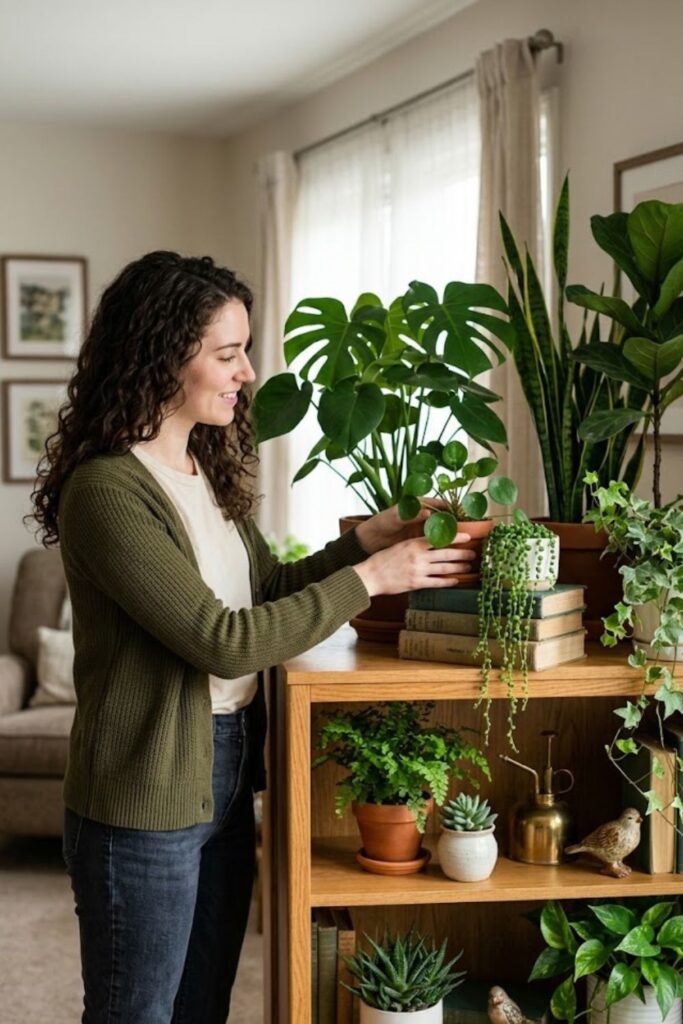
One of the most effective ways to style plant shelves is by layering greenery at different heights. Place taller plants toward the back and shorter ones in the front to create depth. This method prevents the arrangement from looking flat or overcrowded.
Use plant stands or stacked books to subtly elevate smaller pots. Mixing upright plants with trailing varieties adds visual movement and balance. The combination of heights creates a dynamic display that feels thoughtfully curated. This idea works beautifully on living room shelves or built-in bookcases where space allows for creative layering. By maintaining proportion and spacing, your shelf will look lush yet organized rather than cluttered.
2. Mix Trailing Plants with Upright Varieties
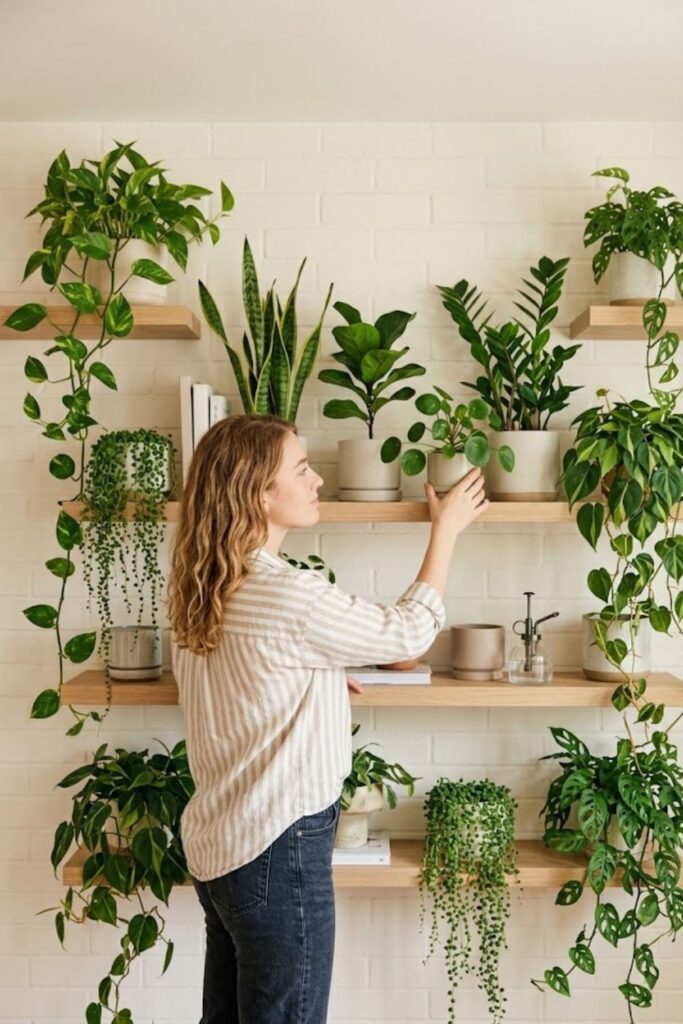
Combining trailing plants with upright species adds contrast and flow to your shelf decor. Upright plants provide structure and anchor the arrangement, while trailing plants soften edges and introduce movement.
Position trailing plants near the edge of the shelf so their vines can cascade naturally. This creates a waterfall effect that draws the eye downward. Meanwhile, upright plants placed toward the back maintain balance and prevent visual chaos. The interplay between vertical and cascading forms makes the shelf feel alive and dynamic. This style is especially effective for floating shelves where you want to maximize impact without overcrowding the space.
3. Create a Symmetrical Shelf Arrangement
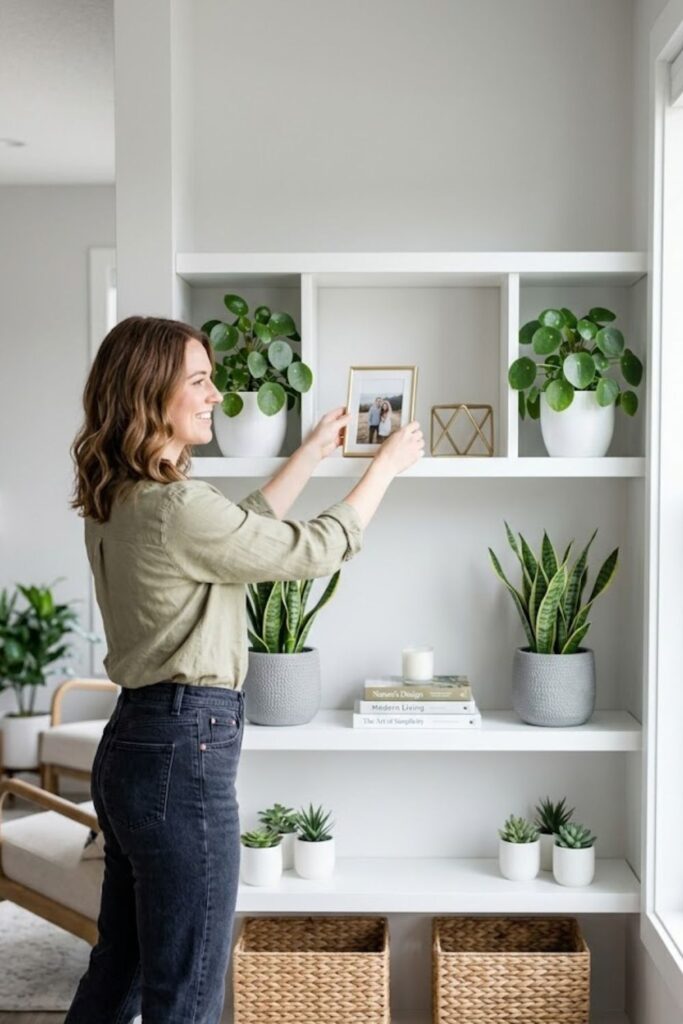
If you prefer a clean and polished look, symmetry is key. Place identical or similar plants on either side of the shelf to create balance. You can use matching pots or similar foliage types to enhance cohesion.
Symmetry works particularly well in formal living rooms or office spaces. Keep the center area open for a decorative piece like a framed photo or small sculpture. The greenery frames the display while maintaining harmony. This approach is simple yet sophisticated, making your plant shelf decor feel intentional and structured.
4. Use Matching Planters for a Cohesive Look
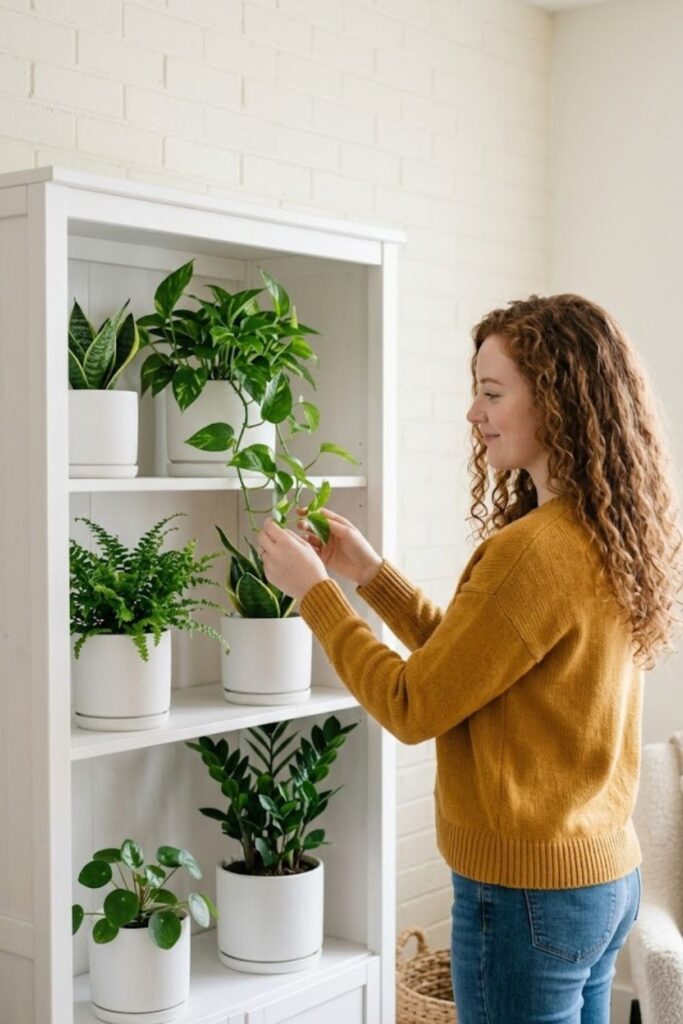
Choosing matching planters instantly unifies your shelf display. Whether you prefer white ceramic, matte black, terracotta, or woven baskets, consistent containers tie everything together.
Even if your plants vary in shape and size, similar pots create visual harmony. This technique works well in minimalist or modern interiors where uniformity enhances style. Matching planters also allow the greenery itself to become the focal point. When selecting pots, consider how their texture and color complement your overall room design.
5. Add Decorative Elements Between Plants
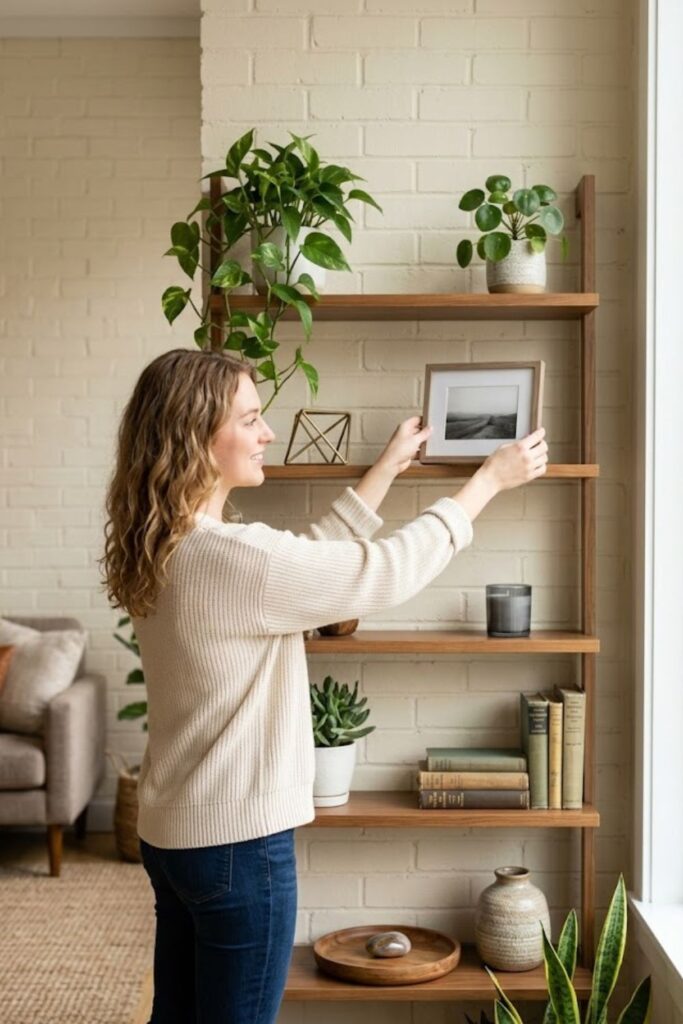
Plant shelf decor doesn’t have to be only greenery. Incorporating decorative elements between plants adds personality and depth. Small sculptures, candles, framed photos, or books can complement your plant arrangement.
Space these items evenly to avoid overcrowding. Decorative objects break up the greenery and create visual breathing room. Choose items that match your theme—wooden accents for rustic spaces or metallic details for modern interiors. This approach turns your shelf into a curated vignette rather than a simple plant lineup.
6. Install Grow Lights for Vibrant Displays
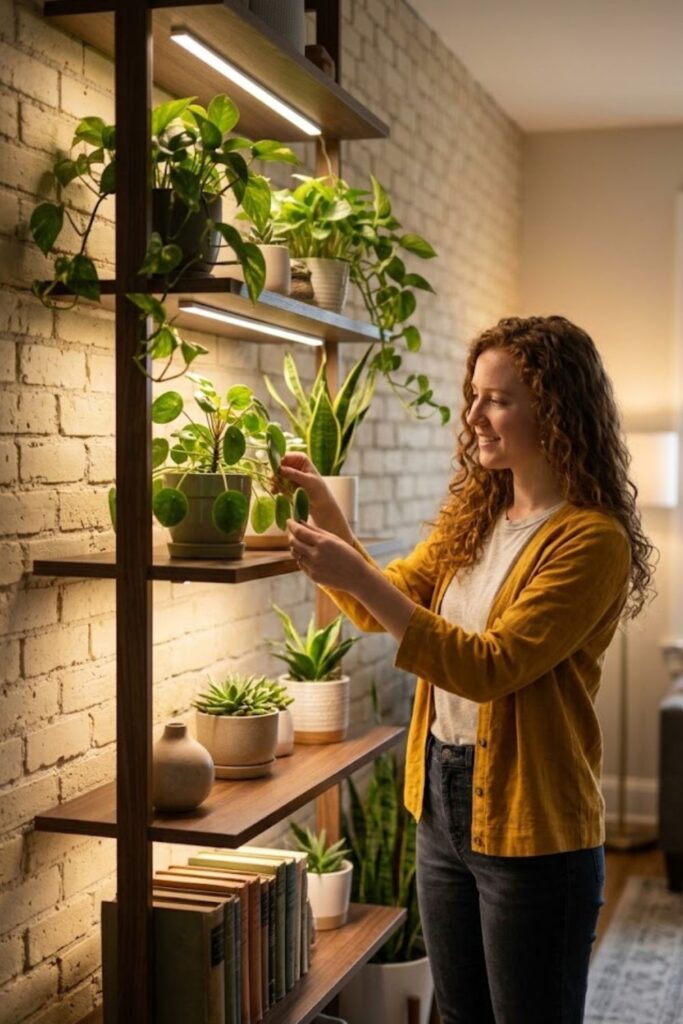
If your shelves lack natural light, installing LED grow light strips can keep your plants healthy while maintaining aesthetics. These lights can be discreetly placed under shelves, providing consistent illumination.
Grow lights ensure your plants thrive without needing to reposition them frequently. They also highlight foliage, making your display glow beautifully in the evening. This idea is perfect for darker corners or rooms with limited windows. Healthy plants always enhance decor, so proper lighting is a crucial element in successful plant shelf decor.
7. Design a Monochrome Green Shelf
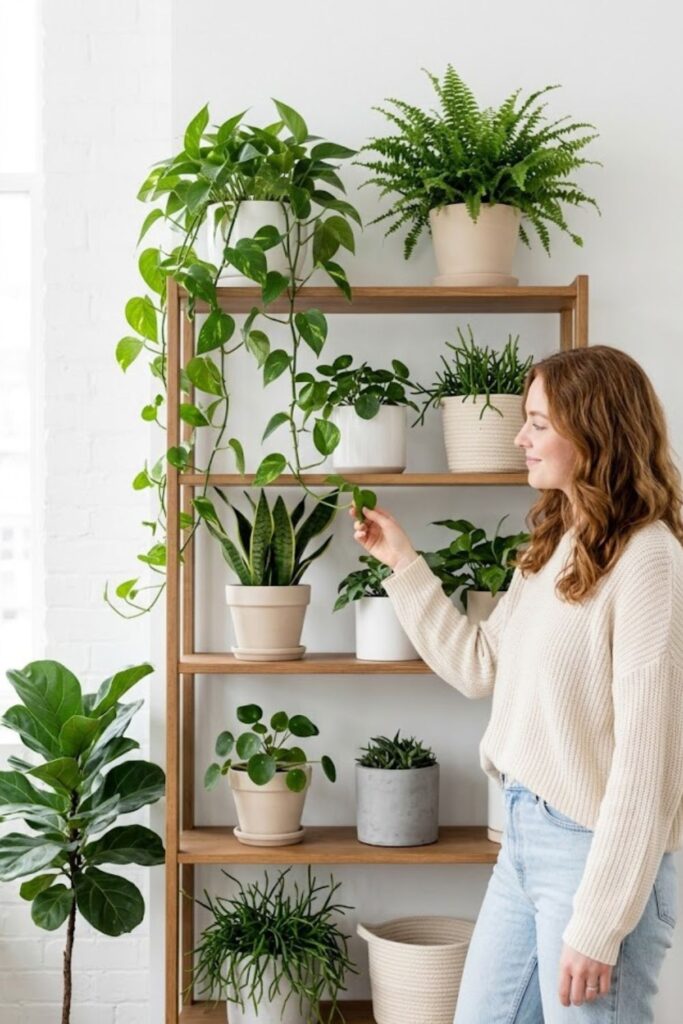
A monochrome shelf focuses on different shades of green rather than colorful pots. Use plants with varying leaf textures and tones to create subtle contrast.
Choose planters in neutral shades like white, beige, or gray. The layered greens become the main visual interest. This approach works well in modern and Scandinavian-inspired interiors. Keeping the color palette simple creates a calming and cohesive look while still allowing your shelf to feel lush and lively.
8. Style a Corner Shelf Garden
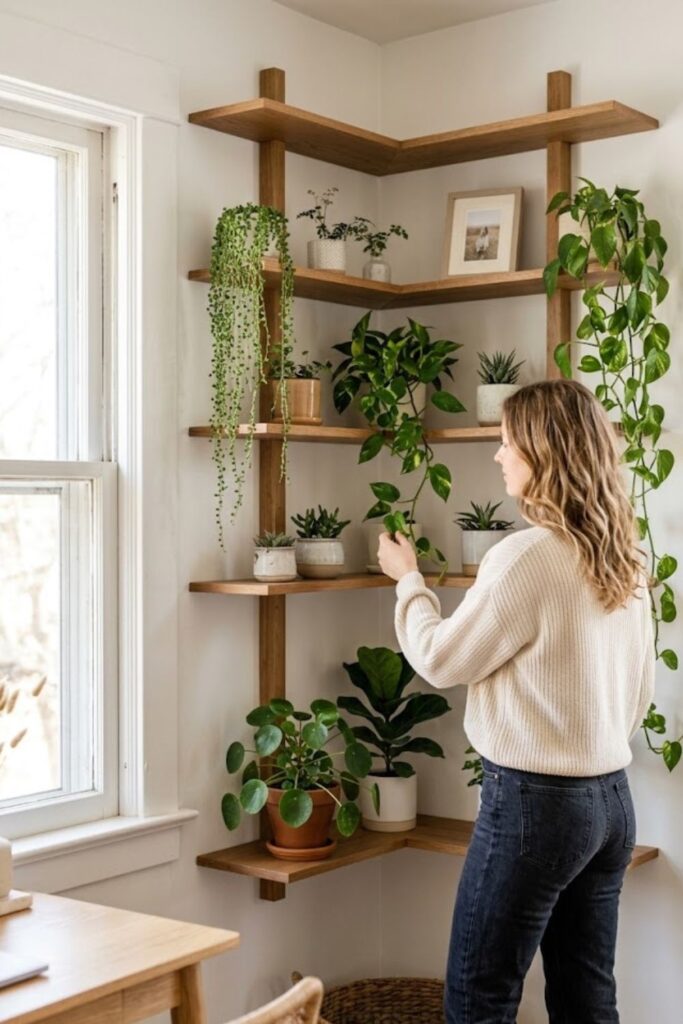
Corner shelves often go underutilized. Transform them into compact plant gardens by arranging greenery strategically.
Place larger plants on lower shelves and smaller ones above. Trailing plants can soften the angles of the corner, making the space feel more organic. This idea maximizes vertical space while adding warmth to overlooked areas. Corner plant shelf decor works beautifully in bedrooms, hallways, or home offices.
9. Combine Books and Plants for Balance
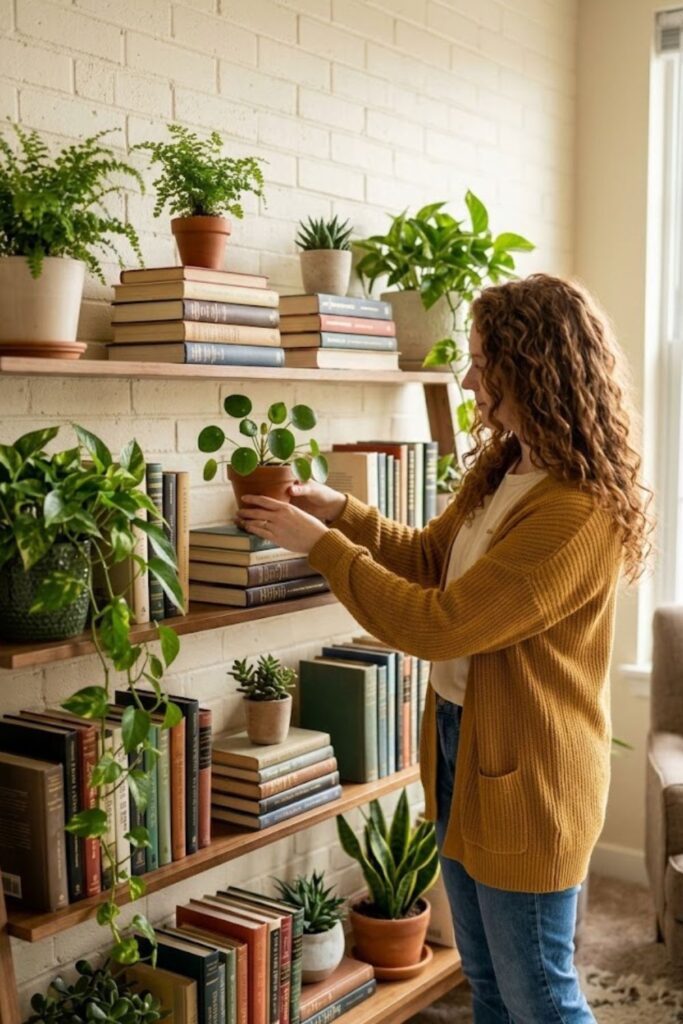
Books and plants complement each other beautifully. Stack books horizontally and place small plants on top to add height variation.
Alternate between vertical book arrangements and plant placements to create rhythm. The greenery adds life to your book collection while maintaining a cozy atmosphere. This idea is ideal for living rooms or study areas where shelves serve multiple functions.
10. Create a Minimalist Floating Shelf Display
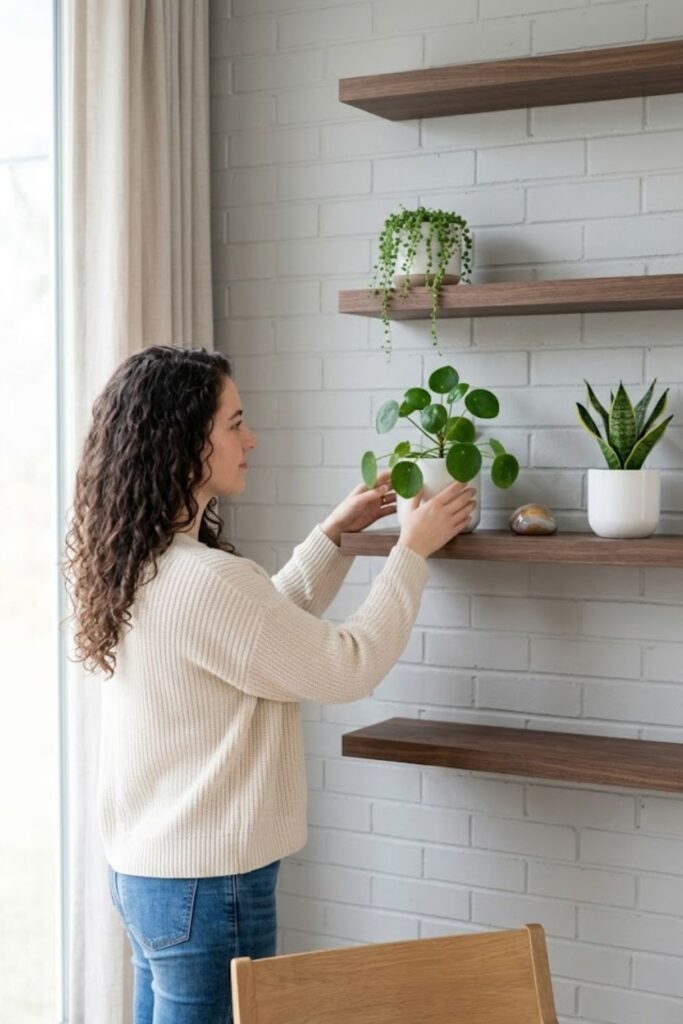
Floating shelves offer a sleek platform for plant decor. Keep the arrangement minimal with only two or three carefully chosen plants.
Spacing is essential in minimalist design. Allow each plant enough room to stand out. Avoid overcrowding and focus on clean lines. This style emphasizes simplicity while maintaining visual impact.
11. Add Texture with Woven and Ceramic Pots
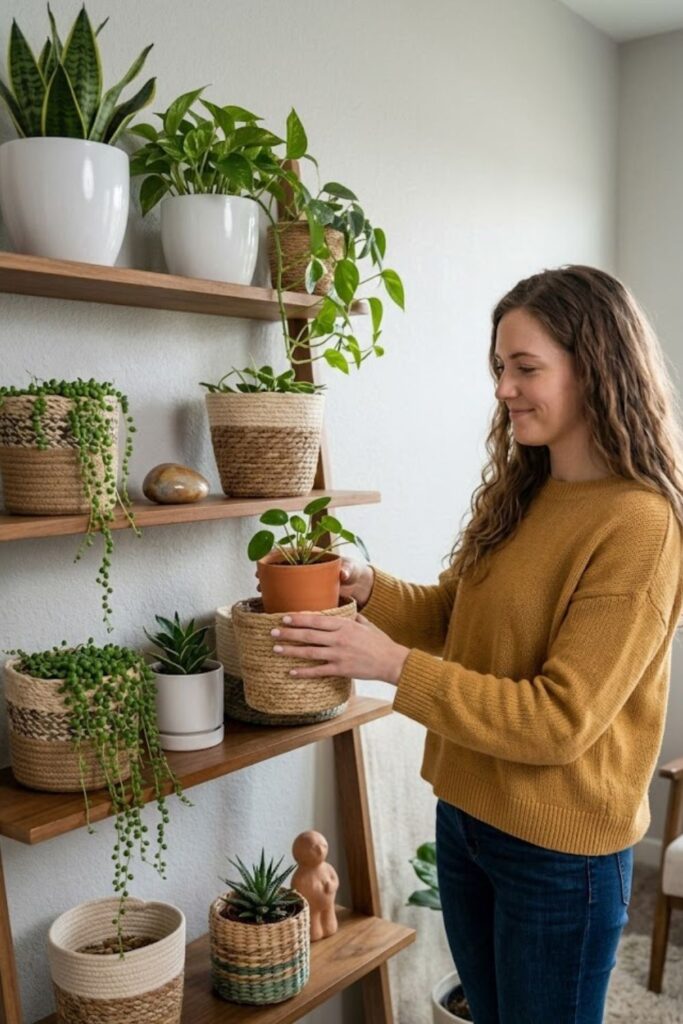
Mixing textures elevates plant shelf decor instantly. Combine smooth ceramic pots with woven basket covers for contrast.
The varied materials create depth and interest without overwhelming the space. Texture adds character and makes your shelf feel thoughtfully styled. Keep colors complementary to maintain harmony.
12. Create a Seasonal Shelf Display
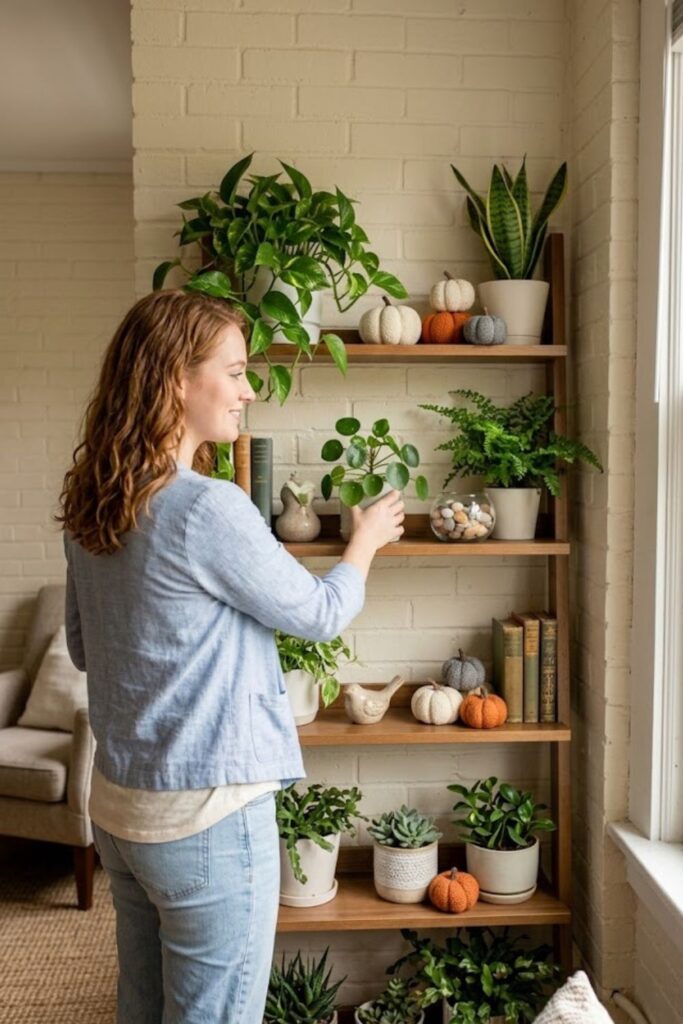
Refresh your plant shelf decor seasonally. Add small accents like decorative pumpkins in fall or light-colored stones in summer.
Seasonal changes keep your shelf feeling updated and dynamic. Rearranging plants occasionally also prevents monotony and allows you to experiment with new layouts.
13. Use Glass Shelves for a Light Look
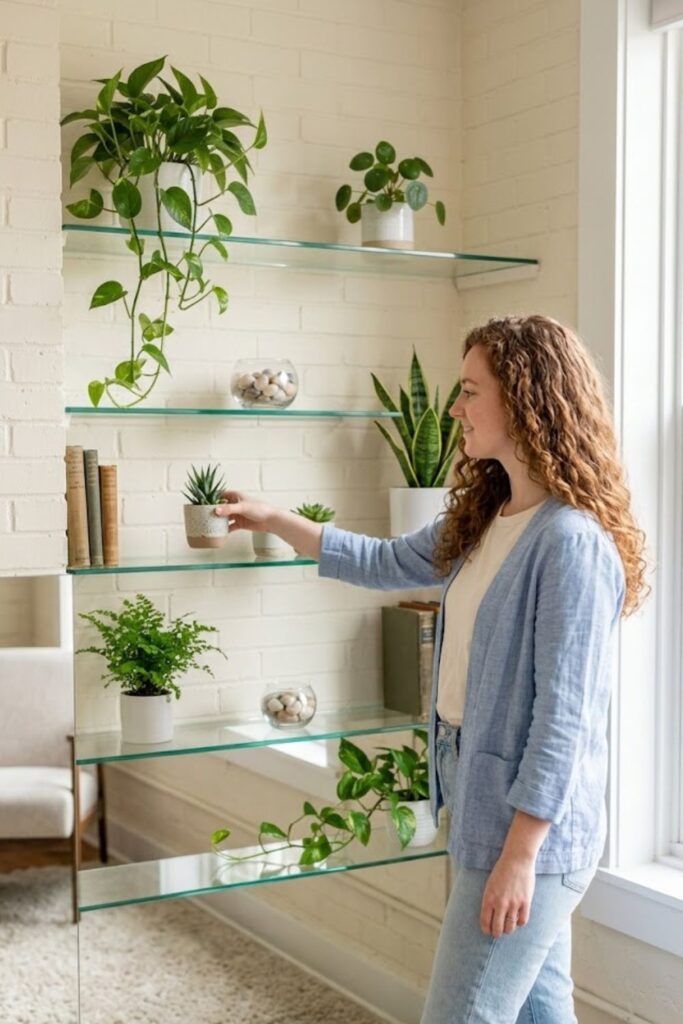
Glass shelves create a light and airy display. The transparency makes plants appear as if they are floating.
This approach works well in small spaces where heavy shelving might feel overwhelming. Keep the arrangement simple to maintain elegance.
14. Arrange Plants by Size Gradient
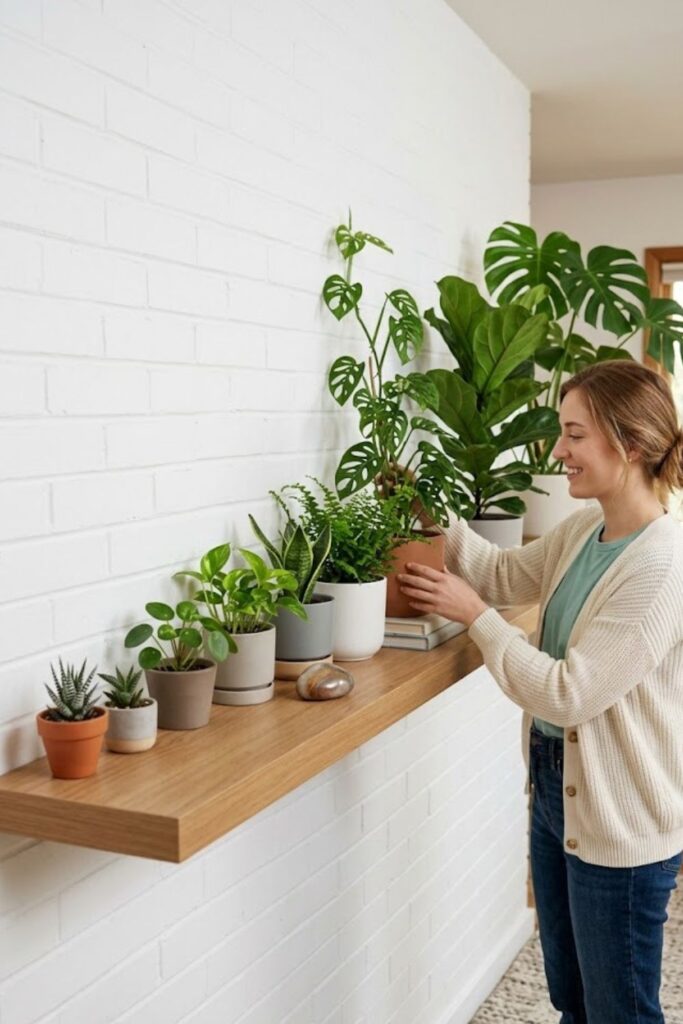
Organize your shelf by gradually increasing plant size from one end to the other. This gradient effect creates smooth visual flow.
The transition in size feels natural and balanced. It also prevents the shelf from looking chaotic. This technique works well for long horizontal shelves.
15. Build a Full Plant Shelf Wall
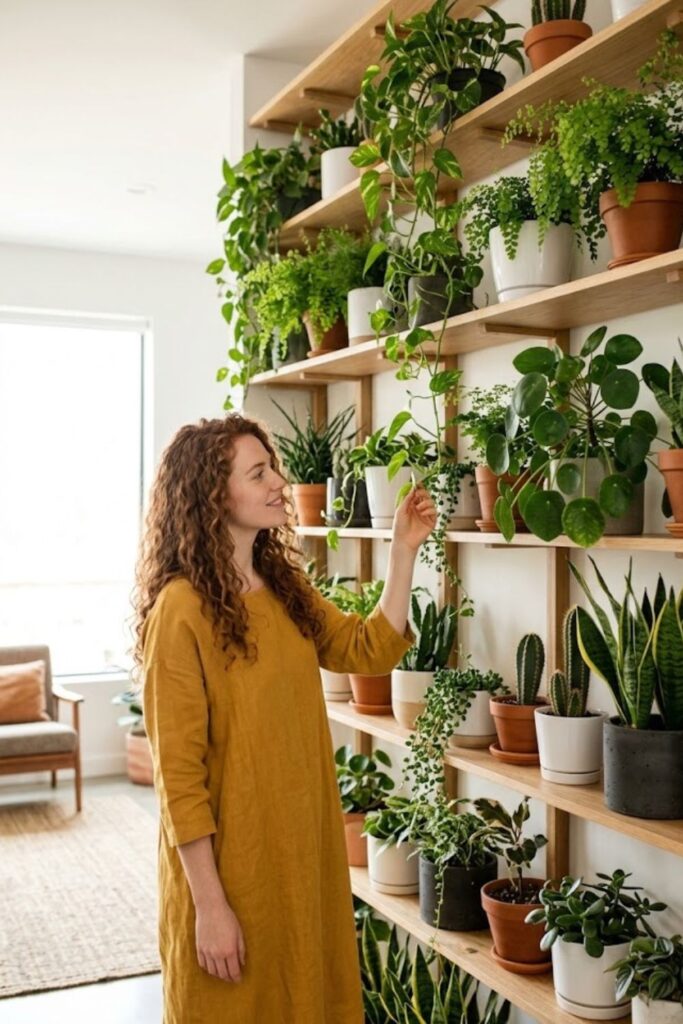
For maximum impact, dedicate an entire wall of shelves to plants. Mix heights, textures, and plant types for a lush display.
Ensure proper spacing and lighting to keep plants healthy. This dramatic approach turns your shelf into a living art installation. It works especially well in open living areas where you want a bold statement.
Tips for Maintaining Beautiful Plant Shelves
Keep shelves clean and dust-free to maintain a polished appearance. Rotate plants occasionally so they receive even light. Avoid overcrowding, as proper airflow helps plants thrive.
Regularly check soil moisture and drainage. Healthy plants enhance your decor far more than neglected ones. With consistent care, your plant shelf decor will remain vibrant and appealing.
Frequently Asked Questions
How many plants should I place on one shelf?
It depends on the shelf size. Aim for balance without overcrowding. Leave space between plants to maintain airflow and visual clarity.
Can artificial plants be used on shelves?
Yes, artificial plants work well in low-light areas. Choose realistic designs to maintain a natural appearance.
What type of shelves are best for plants?
Sturdy wooden or metal shelves are ideal. Ensure they can support the weight of pots and soil.
How do I prevent water damage on shelves?
Use pots with drainage trays and avoid overwatering. Protective liners can also help prevent moisture damage.
How often should I rearrange plant shelves?
Rearranging every few months keeps your decor fresh. Seasonal updates or growth changes may inspire new layouts.
Final Words
Plant shelf decor is a simple yet powerful way to elevate your home. By combining thoughtful arrangements, varied textures, and healthy greenery, you can create a display that feels both stylish and welcoming.
Experiment with different layouts, maintain your plants carefully, and let your shelves reflect your personal style. With creativity and care, your plant shelves can become a beautiful focal point in any room.